


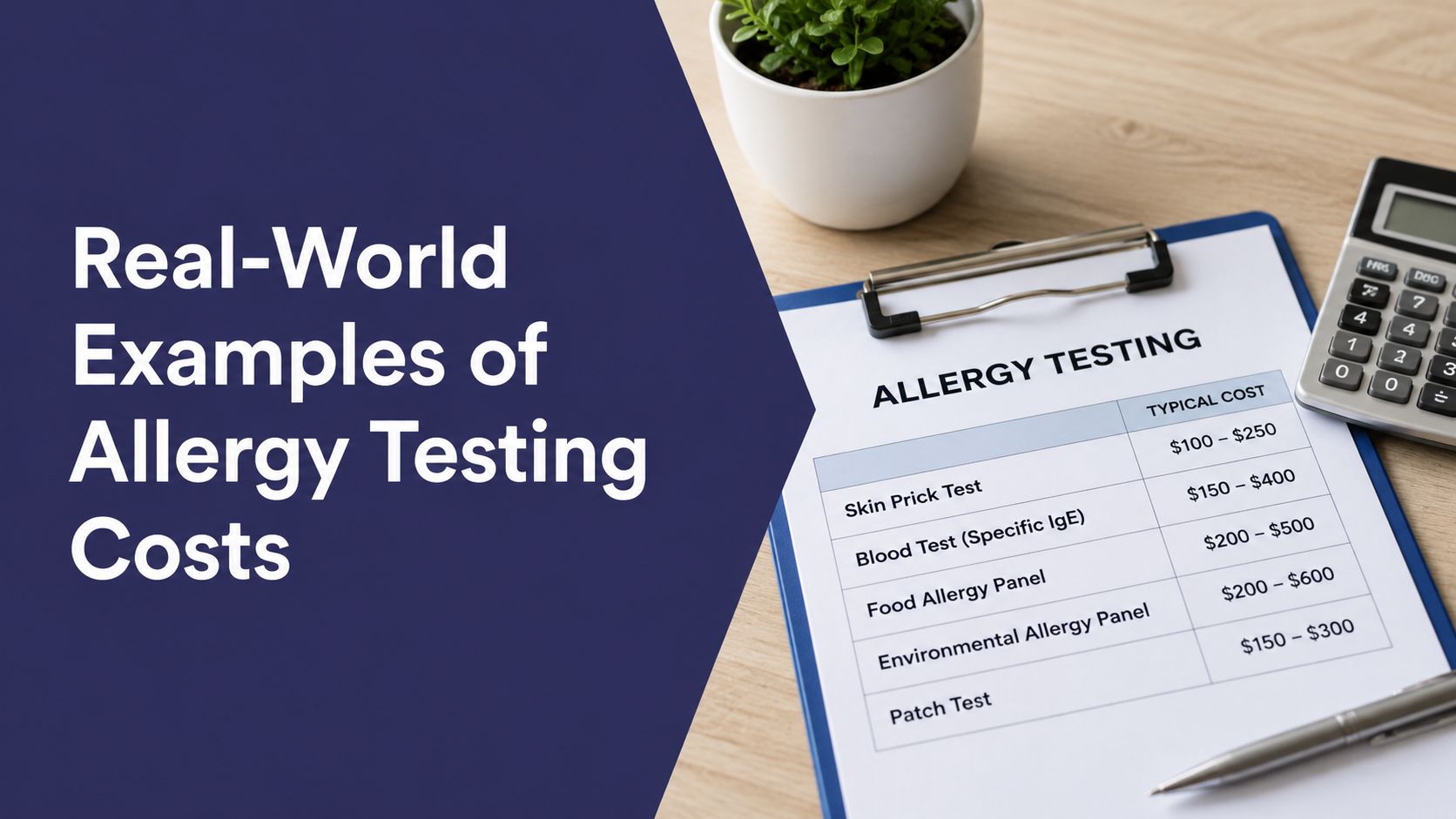
Private allergy testing in the UK can range from around £250 for a simple skin-prick test panel to over £800 for extensive blood tests, including consultations. In practice, what you pay depends less on a single advertised fee and more on what's included in the full assessment, test choice, and follow-up.
If you're searching because you've had weeks of sneezing, unexplained rashes, bloating after meals, or a child who reacted badly to a food, the pricing online can feel unhelpfully vague. One clinic quotes a test, another quotes a consultation, and a third bundles everything together without making it obvious what happens if you need more allergens checked or a second appointment.
That confusion is understandable. Allergy testing cost isn't usually one number. It's often the cost of getting from symptoms to a safe, medically useful answer.
Why Is It So Hard to Find a Straight Answer on Allergy Testing Costs
Patients struggle to compare allergy testing costs because they are often comparing packages, not single test fees.
In private practice, one clinic may show the price for a consultant appointment, another may show the lab charge alone, and a third may bundle consultation, testing, and follow-up into one figure. Those are different products with different clinical value, even if they all appear under the label of “allergy testing.”
That is why online pricing often feels inconsistent. The actual question is rarely, “What does the test cost?” It is, “What will it cost to get from symptoms to a safe, useful answer?”
The headline price is only part of the episode of care
A low advertised fee can be reasonable if your symptoms are straightforward and the clinic has already made clear what is included. It can also be misleading if interpretation, extra allergens, or a follow-up appointment are charged separately.
From a GP's point of view, the practical cost sits across the whole episode of care. That includes the initial history, choosing the right test, reviewing the result in context, and deciding what to do next. Patients with hives after eating prawns need a different assessment from patients with long-standing bloating, and the cost often reflects that difference in complexity.
If you want a clearer sense of what private pathways involve, this guide to allergy testing in the UK is a useful starting point.
The financial cost is only one part of the decision
For many busy professionals, the comparison involves more than private price versus NHS price. It is private price versus the time cost of waiting, repeat GP visits, ongoing symptoms, and the uncertainty that affects work, travel, meals out, or a child's school arrangements.
That does not mean private is always the right choice. It means the cheaper route on paper is not always the lower-cost route overall.
A practical example helps. If someone has a convincing history of immediate reactions to nuts, the value is not in buying the biggest panel available. The value is in seeing the right clinician, testing the likely triggers, and getting advice you can act on. For families trying to make sense of symptoms before a specialist review, information on recognizing nut allergy reactions may help frame the urgency, but it does not replace a proper assessment.
What to ask before you compare prices
Patients usually need answers to three plain questions:
- What is included in the quoted fee.
- What extra charges are likely if the first test does not answer the question.
- How quickly the clinic can move from testing to interpretation and a treatment plan.
Those points matter more than a neat headline number. You are paying for clinical judgement as much as for the test itself. Once that is clear, the variation in allergy testing costs starts to make more sense.
Understanding Different Types of Allergy Tests
Not all allergy tests answer the same question. Choosing the right one is one of the biggest factors in keeping your allergy testing cost sensible and your results useful.
Skin-prick testing
Skin-prick testing is often the lower-cost private option. It's quick, done in clinic, and commonly used for inhalant allergens such as pollen, dust mite, and pet dander, and in selected food allergy assessments.
A tiny amount of allergen is introduced to the surface of the skin, usually on the forearm or back, and the reaction is read shortly afterwards. For the right patient, it's efficient and practical.
It also has limits. If you've taken antihistamines recently, have widespread eczema, or can't safely stop certain medicines, skin-prick testing may not be the best fit.
Specific IgE blood testing
Specific IgE blood testing measures sensitisation in a blood sample. For UK private payers, the key cost driver is often the modality itself: skin-prick testing is generally the lower-cost option, while serum specific-IgE blood testing is more expensive because each allergen is individually assayed and reported, as described in this NHS literature review on allergy testing methods.
Blood testing is often useful when:
- Antihistamines can't be paused
- Skin disease makes skin testing unreliable
- There's a need to avoid provoking skin reactions during the appointment
- The clinical history points to a more selective laboratory approach
It isn't automatically “better”. It's more suitable in some situations.
Patch testing
Patch testing answers a different question. It's mainly used for contact dermatitis, where the issue may be a reaction to substances touching the skin, such as fragrance, preservatives, metals, or topical products.
Many people use the word “allergy” to describe any rash, yet in reality, hay fever, food allergy, hives, and contact dermatitis don't all need the same test.
A good allergy assessment starts with the history. The test should fit the symptom pattern, not the other way round.
Side-by-side comparison
| Feature | Skin-Prick Test (SPT) | Specific IgE Blood Test |
|---|---|---|
| How it works | Small amounts of allergen are introduced into the skin surface | A blood sample is analysed for allergen-specific IgE |
| Typical setting | In-clinic assessment | Blood draw plus laboratory analysis |
| Speed | Often rapid from the patient's point of view | Results depend on lab processing |
| Cost pattern | Generally lower-cost | Usually more expensive |
| Best suited to | Focused inhalant or selected food assessment | Patients who can't stop antihistamines, have severe eczema, or need an alternative to skin testing |
| Main limitation | Medication and skin conditions can interfere | Broad panels can become expensive and less clinically useful |
For families worried about food reactions, it helps to understand the symptom pattern before choosing the test. If you're trying to work out whether a reaction looked immediate and potentially serious, this guide to recognizing nut allergy reactions is a useful plain-English reference before you speak to a clinician.
If you want a broader UK overview of what private pathways usually involve, this guide on allergy testing in the UK gives a practical starting point.
Key Factors That Determine Your Total Cost
A £200 test can easily turn into a £400 to £700 episode of care once you add the parts that make the result useful. Patients often focus on the headline fee, then get caught out by blood test add-ons, a separate results appointment, or treatment advice billed later.
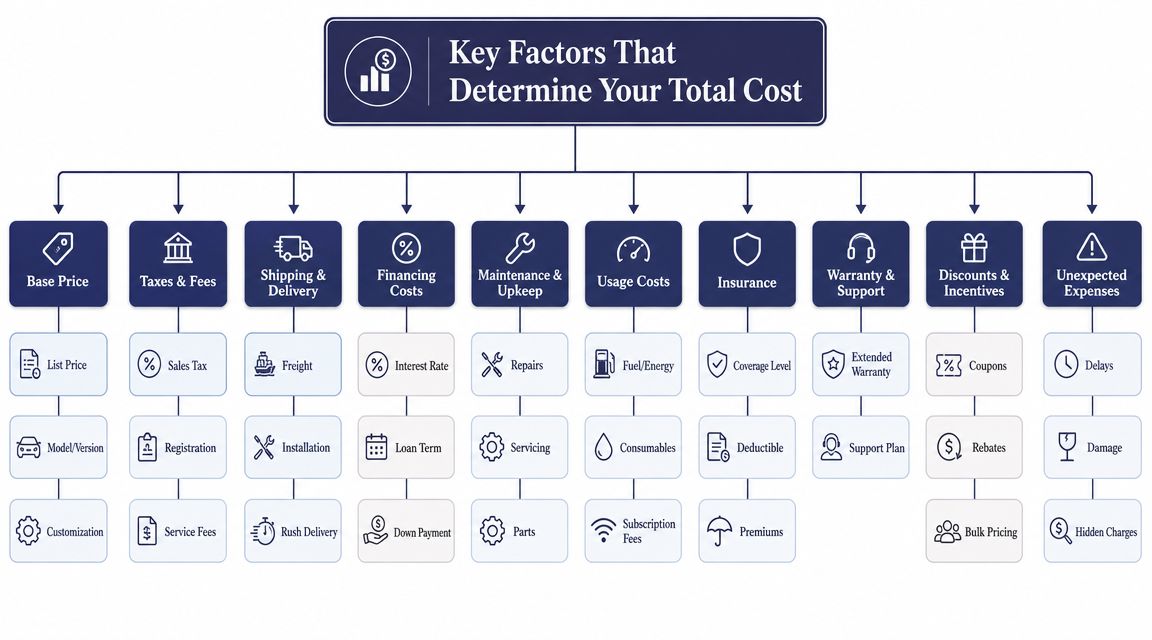
The test method changes the price
The biggest price split is usually between skin-prick testing and specific IgE blood testing.
Skin-prick testing is often cheaper because it can be done in clinic during the same appointment. Blood testing usually costs more because there is a laboratory fee on top, and the price can rise further if multiple allergens are requested. That does not mean blood tests are poor value. They are often the sensible choice if you cannot stop antihistamines, have widespread eczema, or are not suitable for skin testing.
The practical question is simple. Which method is most likely to answer the clinical question clearly, with the fewest repeat appointments?
Follow-up is where costs often increase
A test result on its own rarely settles the problem. It still needs to be matched against the history.
In practice, the follow-up appointment is where the clinician works out whether a positive result reflects a true allergy, an irrelevant sensitisation, or something that needs a different line of investigation altogether. That review may also include medication advice, avoidance measures, an emergency plan, or referral onward if the picture is complex.
Ask this before booking: “Does the quoted fee include result interpretation and a written management plan, or is that charged separately?”
Treatment and onward care may sit outside the quoted fee
This is the part many clinics do not make obvious enough.
If the testing suggests allergic rhinitis, eczema triggers, or food allergy risk, the next costs may include prescriptions, repeat reviews, dietetic input, or referral to a specialist service. For a busy professional, there is also the cost of time off work, extra appointments, and living with symptoms while the process drags on. That is why the actual comparison is not only test fee versus test fee. It is the full cost of getting from symptoms to a safe, workable plan.
If you are weighing private care against public waiting times, this guide to private healthcare vs NHS waiting times and costs helps frame that decision properly.
A narrower question usually keeps costs under control
The most cost-effective allergy assessment starts with a clear clinical question.
If symptoms are tightly linked to pollen season, pets, or a specific food eaten immediately before a reaction, the work-up is usually more focused. If symptoms are vague, delayed, or mixed in with bowel problems, skin flares, or non-allergic conditions, testing can spread wider and become more expensive without giving a clear answer.
That is one reason I advise patients to spend a little time preparing a symptom timeline before the first appointment. Good history-taking often saves money.
If you're comparing clinics, it helps to view pricing options from providers that show what is included and what is billed separately. Transparent pricing does not guarantee better care, but it does make it easier to judge the likely total cost before you commit.
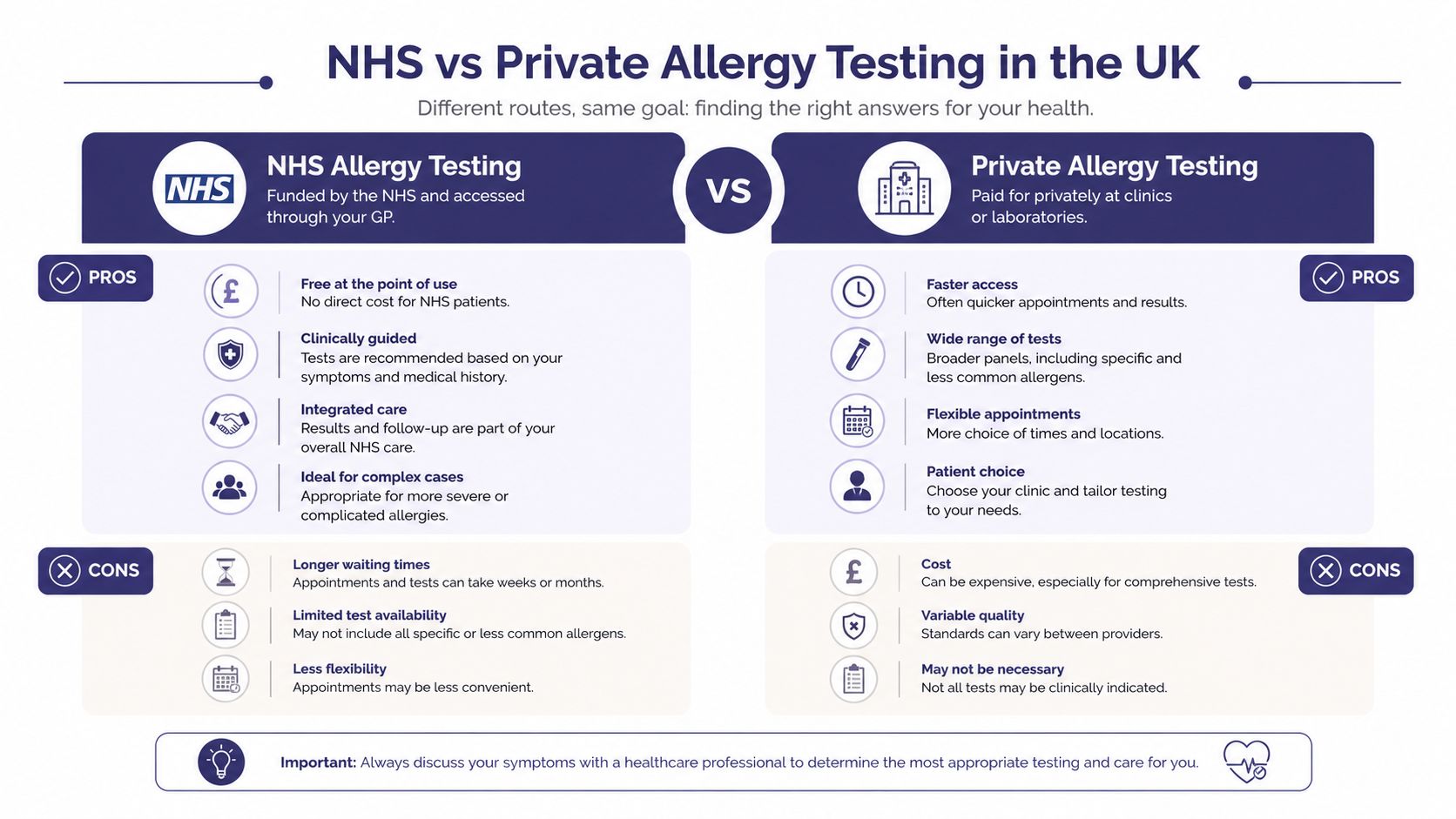
NHS vs Private Allergy Testing in the UK
For many UK patients, the key decision isn't whether allergy testing has value. It's whether to wait for NHS care or pay for faster access privately.
What the NHS route does well
When clinically indicated, allergy testing is generally covered on the NHS in England. That's a major advantage for patients trying to manage costs.
The NHS pathway also tends to be more structured. Referral usually starts with a GP, and testing is guided by symptoms rather than self-directed shopping for a panel.
Why patients still choose private care
A key reason UK patients go private is not just the test itself, but the cost of delay. For working adults and families, rapid diagnosis can reduce missed work and prolonged uncertainty, making the fee feel worthwhile, as noted in this discussion of why speed influences allergy testing decisions.
That's especially relevant if you need answers before a school term, travel, sports season, or an important work period where poor sleep and ongoing symptoms are starting to affect your performance.
The trade-off is really time versus money
Private care usually offers faster appointments, more control over scheduling, and often a quicker route to specialist interpretation. But it comes with an out-of-pocket cost.
NHS care reduces the direct financial burden. The trade-off can be waiting, uncertainty, and longer periods of trial-and-error treatment.
For busy professionals, that calculation is often practical rather than philosophical:
- Can you keep functioning well while you wait
- Are symptoms affecting sleep, concentration, or exercise
- Do you need a diagnosis quickly enough to change plans safely
- Would a clear answer now stop repeated spending on ineffective treatments
If symptoms are mild and manageable, waiting may be reasonable. If they're interfering with work, school, training, or day-to-day decisions, speed has real value.
If you're weighing broader care options, this comparison of private healthcare versus the NHS is a helpful companion read.
Real-World Examples of Allergy Testing Costs
The best way to understand allergy testing cost is to look at patient journeys rather than menu prices. In the UK private sector, the true cost is often best understood as an “episode of care”, because the out-of-pocket amount depends on the number of visits, the test used, and the specialist interpretation required, as explained in this analysis of allergy testing as an episode of care.
A focused seasonal allergy case
A city professional has predictable spring symptoms. Sneezing, itchy eyes, and nasal blockage flare when tree and grass pollen rise. They don't have eczema, and they can pause antihistamines safely before the appointment.
Their likely route is a consultation plus a focused skin-prick panel. That often sits near the lower end of private pricing.
Typical cost pattern
- Consultation and history
- Targeted skin-prick testing
- Same-visit interpretation
- Advice on pollen avoidance, nasal sprays, and symptom timing
This is the sort of case where the lower end of the private range often makes sense.
A child with a suspected nut reaction
A parent reports hives and lip swelling shortly after a snack containing nuts. The family needs a careful answer, not guesswork. Depending on the history, the clinician may favour a specific IgE blood test, especially if there are practical reasons not to do skin testing that day.
The cost is usually higher because the testing is more laboratory-led and the follow-up discussion matters just as much as the result.
Typical cost pattern
- Paediatric or family-focused consultation
- Targeted specific IgE blood testing
- Separate review of results
- Safety-net advice and school or travel planning
This sort of appointment can move towards the upper middle of the private range, especially if more than one allergen needs analysis.
An adult with chronic hives and mixed symptoms
Another patient has ongoing hives, intermittent facial swelling, and no clear trigger. They've also changed diet repeatedly and are now avoiding several foods without convincing evidence they're the cause.
Broad testing can become expensive without being helpful. A good clinician usually starts by narrowing the history, then decides whether allergy testing is appropriate at all, or whether another explanation is more likely.
Typical cost pattern
- Longer specialist consultation
- Selective testing, if clinically justified
- Possible follow-up visit
- Advice to stop unnecessary food restriction and focus on symptom control
This is the case where patients most benefit from thinking in terms of total pathway rather than one test fee. The right consultation can save money by preventing the wrong tests.
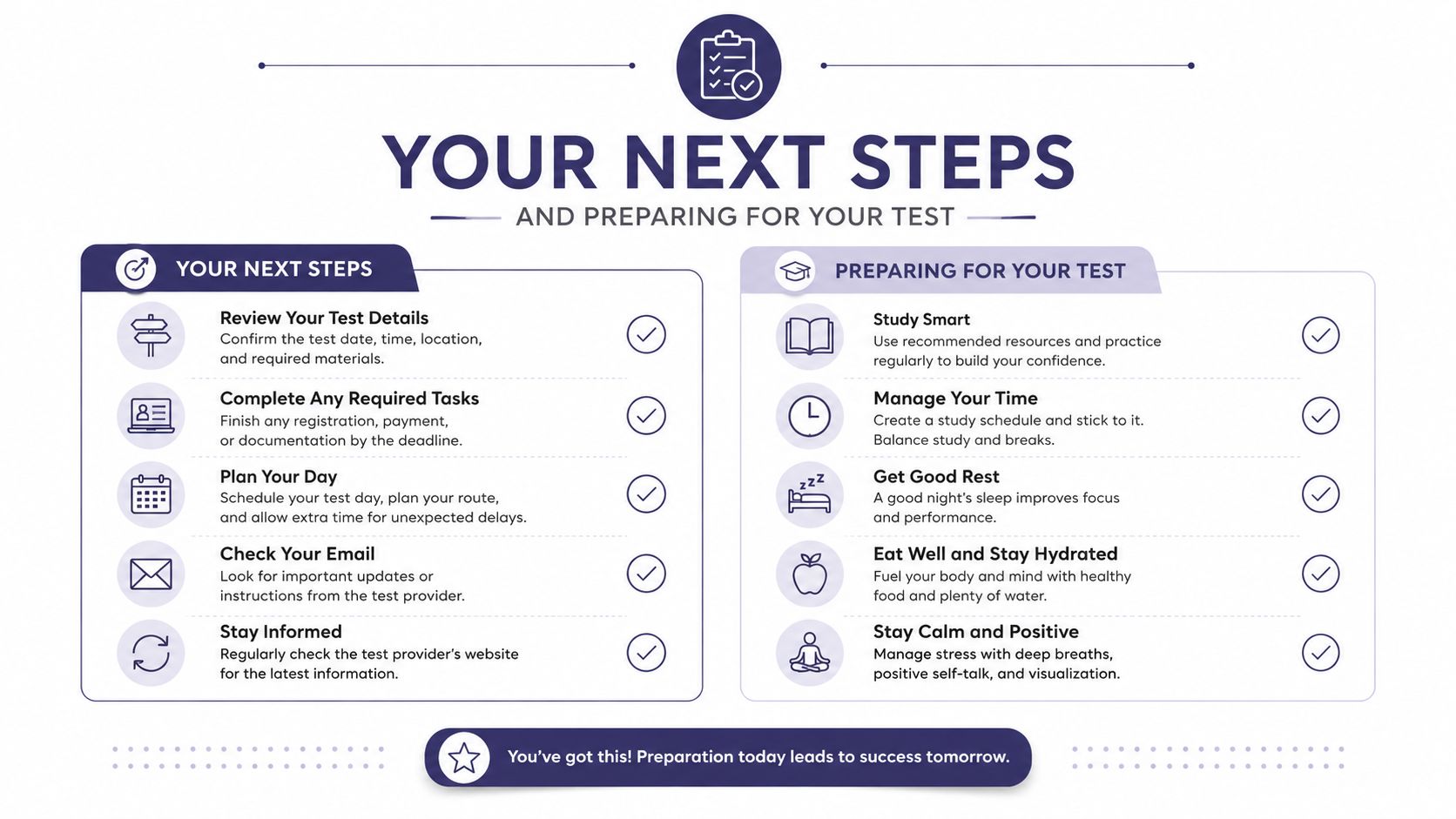
Your Next Steps and Preparing for Your Test
Good preparation lowers the risk of wasted appointments and unhelpful results. In the UK, allergy pathways emphasise GP and specialist-led assessment rather than direct self-testing, because medically supervised testing helps reduce false results and improves safety, as outlined in this overview of medically supervised allergy diagnostic pathways.
Start with a symptom diary
Before you book, write down:
- When symptoms happen: Month, season, time of day, indoor or outdoor
- What symptoms you get: Sneezing, wheeze, rash, swelling, stomach upset
- What seems to trigger them: Pets, dust, exercise, pollen, foods, skin products
- What you've already tried: Antihistamines, nasal sprays, elimination diets, emollients
This helps a clinician order a targeted test rather than a broad panel that generates noise.
Check your medicines before the appointment
For skin-prick testing, clinics commonly ask patients to stop antihistamines beforehand because they can suppress skin reactions. Don't stop prescribed medication on your own. Follow the instructions from the clinician or clinic performing the test.
Also bring a full medication list, including over-the-counter tablets, nasal sprays, supplements, and creams.
Use sensible lifestyle measures while waiting
You don't need to wait for testing to reduce exposure and improve day-to-day control.
- For pollen symptoms: Shower after time outdoors, change clothes, and keep bedroom windows closed when counts are high.
- For dust and indoor triggers: Focus on regular vacuuming, hot washing of bedding where appropriate, and reducing clutter in the bedroom.
- For skin symptoms: Use bland emollients consistently and avoid introducing multiple new toiletries at once.
- For possible food reactions: Don't self-impose overly restrictive diets without guidance, especially in children.
If home triggers seem likely, practical HVAC tips for allergen reduction can help you think about airflow, filters, and indoor allergen build-up in a more structured way.
Bring photos of any rash or swelling if it isn't visible on the day. That often adds useful clinical context.
A good allergy consultation should leave you with more than a result. It should give you a realistic explanation, a plan you can follow, and a clearer sense of which lifestyle changes are worth your effort.
If you want a clear, medically grounded assessment without the usual uncertainty, The Lagom Clinic offers private GP care in Bristol with time to explore your symptoms properly, discuss the most appropriate testing route, and build a practical treatment and lifestyle plan around your work, family, and health goals.


 Members Consultation