


One of the most common questions we hear is, “When should I start having mammograms?” It’s a great question, and the answer isn’t as simple as a single number. Your ideal mammogram screening age really depends on your personal health story.
In the UK, the NHS has a national breast screening programme that sends out its first invitation to women somewhere between the ages of 50 and 71. This guide will help you understand that programme, your personal risk factors, and the powerful lifestyle changes you can make to support your breast health.
Understanding Mammogram Screening Age in the UK
The NHS programme is a brilliant public health initiative. It’s designed as a wide-reaching safety net, offering screening every three years to catch cancers early in the age group where they most commonly occur. It has been instrumental in saving lives across the country.
But that population-level approach doesn't automatically mean it's the perfect timeline for you. Think of it this way: the NHS provides an excellent, well-paved road for everyone. However, your own health history, family genetics, and lifestyle factors might mean you need to take an earlier exit.
A proactive approach to breast health is about more than just waiting for that NHS letter to land on your doormat. It means getting to know your personal risk profile, making informed lifestyle choices, and deciding on a screening journey that is right for you. This is a crucial part of taking charge of your long-term health.
For many women, particularly those under 50, being proactive is key. This is where private screening options can fill the gap, offering peace of mind and earlier detection. You can learn more about how this fits into a wider health plan by reading about what is a health screening.
The Role of Healthy Lifestyle Choices
Screening is incredibly important, but it's only one part of the picture. No matter your age, the lifestyle choices you make every day have a real, measurable impact on your overall risk of developing breast cancer. These actions are your first line of defence.
Here are a few scientifically-backed adjustments that can make a difference:
- Maintain a healthy weight, especially after menopause. Excess fat tissue can increase oestrogen levels, a hormone linked to a higher risk of certain breast cancers.
- Get regular physical activity. Aiming for at least 150 minutes of moderate-intensity exercise (like brisk walking or cycling) a week is a great, evidence-based goal.
- Limit your alcohol intake. There is a clear, dose-dependent link between alcohol and breast cancer risk. Even small reductions can be beneficial.
- Eat a nutrient-rich diet that’s packed with a variety of fruits, vegetables, fibre, and whole grains. A Mediterranean-style diet is often recommended for its anti-inflammatory properties.
This guide will walk you through both the standard NHS pathway and the proactive, private options available. We’ll help you figure out which path makes the most sense for your health and wellbeing.
How the NHS Breast Screening Programme Works
The NHS Breast Screening Programme is one of the most important public health initiatives in the UK, designed with one clear goal: to find breast cancer at its earliest possible stage when it's most treatable. It's set up as a nationwide system, meaning it automatically invites women in the age group where screening is proven to be most effective.
If you're registered with a GP in the UK, you don't need to do a thing. An invitation letter for your first mammogram will arrive through your letterbox sometime between your 50th and 53rd birthday. This isn't just a one-off check-in; you'll be invited back for routine screening every three years until you're 71. This regular rhythm is what helps doctors spot any subtle changes over time.
Why This Specific Age Range?
You might wonder why the programme starts at 50. The choice of the 50 to 71 age bracket for routine mammogram screening is backed by a huge amount of research. A woman's risk of developing breast cancer naturally increases with age, and this window is where screening is most powerful at reducing the number of deaths from the disease.
The NHS has to carefully balance the life-saving benefits of early detection against potential downsides, like the anxiety a false-positive result can cause. By focusing on this age group, they can channel resources where they'll make the biggest difference. It's a system built for the general population, which means it doesn't automatically account for personal risk factors—something we'll look at next.
It's important to remember that screening doesn't prevent cancer, but it's our best tool for finding it early. A healthy lifestyle—getting regular exercise, eating a balanced diet rich in plants, and moderating your alcohol intake—is one of the most powerful things you can do to actively lower your risk at any age.
Screening Beyond Age 71
While the automatic invitations stop when you turn 71, your access to screening doesn't. Many women don't realise this, but you still have the right to free breast screening every three years. The only difference is that you now have to ask for it.
To book a mammogram after you're 71, you just need to get in touch with your local NHS breast screening unit directly or speak to your GP to arrange it. Taking this simple, proactive step ensures your breast health continues to be monitored, giving you valuable peace of mind as you get older.
What's Your Personal Breast Cancer Risk?
While the NHS screening programme offers a brilliant safety net for the general population, it’s designed as a one-size-fits-all approach. But when it comes to your health, your personal story is what truly matters. Getting to grips with the factors that shape your individual risk is the first step toward a screening plan that’s genuinely right for you.
Certain things in your family or medical history can completely change the game, often meaning you need to start screening much earlier than the standard mammogram screening age of 50.
Think of it this way: the national weather forecast is useful for everyone, but if you live on the coast, you pay much closer attention to the tide times and local storm warnings. It's the same with your health. If you have specific risk factors, you need a more detailed and personal map for your screening journey.
This chart shows how the standard NHS screening pathway works for most people.
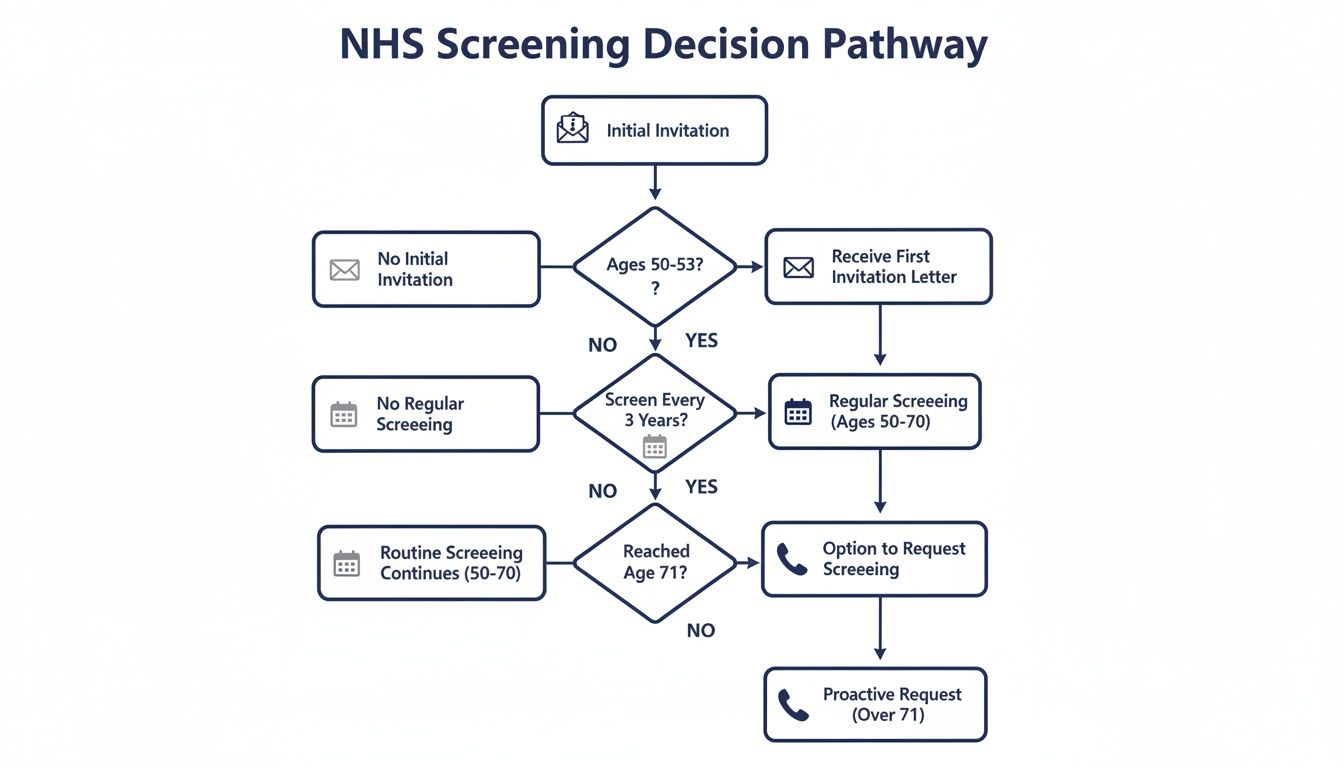
As you can see, it's a straightforward process for women aged 50 and over. However, this path doesn't factor in the individual risks that might mean you need to take action sooner.
When an Earlier Start Is Crucial
For some people, waiting until 50 simply isn't the safest choice. If you're considered 'high risk', it means you have certain factors that, statistically, increase your chances of developing breast cancer. In these situations, screening often starts much earlier – sometimes from age 30 – and might include different or more frequent scans, like an MRI.
The key factors that would put you in a high-risk category include:
- A Significant Family History: This is more than just one relative having had cancer. We're talking about a pattern, such as several close blood relatives (your mother, sister, or daughter) on the same side of your family being diagnosed with breast or ovarian cancer, especially if they were diagnosed at a young age (under 50).
- Known Genetic Mutations: If you or a close family member have tested positive for gene mutations like BRCA1 or BRCA2, your lifetime risk is significantly higher. These inherited genes are strongly linked to an increased risk of both breast and ovarian cancers.
- Previous Radiotherapy to the Chest: Women who had radiation therapy on their chest, particularly between the ages of 10 and 30 (often for treating conditions like Hodgkin's lymphoma), have a higher risk and are advised to begin screening much earlier.
If any of this sounds familiar, it's absolutely vital to discuss it with your doctor. They can properly assess your history and, if needed, refer you to a specialist genetics service or get you started on an enhanced screening schedule.
Taking Control with Lifestyle Choices
Beyond the risks you can't change, like your genes, there are powerful, proactive steps you can take every day to help lower your risk of breast cancer. These aren't just minor tweaks; scientific evidence shows that certain lifestyle choices can make a real, tangible difference.
While screening is our best tool for catching cancer early, a healthy lifestyle is your best tool for actively reducing your risk in the first place. The two work hand-in-hand to protect you.
Here are some of the most impactful, evidence-based changes you can make:
- Maintain a Healthy Weight: This becomes particularly important after menopause. Storing excess fat can raise oestrogen levels, and high oestrogen can encourage some types of breast cancer cells to grow. Focusing on whole foods and portion awareness can help.
- Limit Alcohol: The link between alcohol and an increased risk of breast cancer is very clear. Even small amounts can have an effect, so cutting back is always a positive step for your breast health. Try switching to non-alcoholic alternatives during the week.
- Stay Physically Active: Try to get at least 150 minutes of moderate-intensity activity (like a brisk walk or a bike ride) or 75 minutes of vigorous activity (like running or a HIIT class) each week. Regular exercise is fantastic for helping to regulate hormones, support your immune system, and maintain a healthy weight.
By understanding both the risk factors you were born with and the lifestyle choices you can control, you can work with your doctor to build a screening and wellness plan that truly fits you. It’s all about being informed and proactive, at every age.
Choosing Between Private and NHS Mammograms
When it comes to breast screening, it’s good to know you have options. In the UK, you’ll encounter two main routes: the NHS Breast Screening Programme and private screening. While the NHS provides a brilliant, essential service for the whole population, private screening offers something different—more control and the ability to be proactive.
A good way to think about it is to compare the NHS programme to a reliable public transport system. It’s designed to serve everyone, automatically inviting women for screening between the ages of 50 and 71, and it’s an absolutely vital safety net. Private screening is more like having your own car; it gives you direct control over your journey, your timeline, and your route.
Why Choose Private Screening?
The biggest reason women come to us for a private mammogram is the desire to take action earlier, especially before the standard NHS mammogram screening age. Many women from 40 onwards simply want the reassurance that comes with earlier screening, even if they don't have the specific risk factors that would qualify them for earlier checks on the NHS.
Taking this proactive approach has some clear benefits:
- Self-Referral from Age 40: You don’t need a GP referral to book a private mammogram. You can simply decide for yourself that you want to start screening, which can provide enormous peace of mind.
- Greater Flexibility: Private clinics can usually offer more flexible appointment times, like evenings or weekends, which makes it much easier to fit screening into a busy life.
- Quicker Turnaround: The whole process, from booking your appointment to getting your results, is generally much faster in the private sector. This really helps to shorten that anxious waiting period.
Choosing private screening isn’t about replacing the fantastic service the NHS provides. It's about supplementing it, giving you the power to take control of your health timeline based on your personal comfort level and desire for proactive care.
Understanding the Financial Side
Of course, the key difference is cost. NHS screening is free, while private mammograms are a paid-for service, with prices varying between clinics and locations. Many people use private medical insurance to cover this cost. If you're looking into insurance, resources like a complete guide to health insurance for living abroad can be useful for understanding private healthcare, even if you’re not an expat.
Ultimately, deciding between the NHS and private screening is a very personal choice. To help you weigh it up, you can explore our guide to private healthcare in the UK. The right path for you will depend on your age, personal risk factors, and how much control you want over your screening schedule.
What to Expect During Your Mammogram Appointment
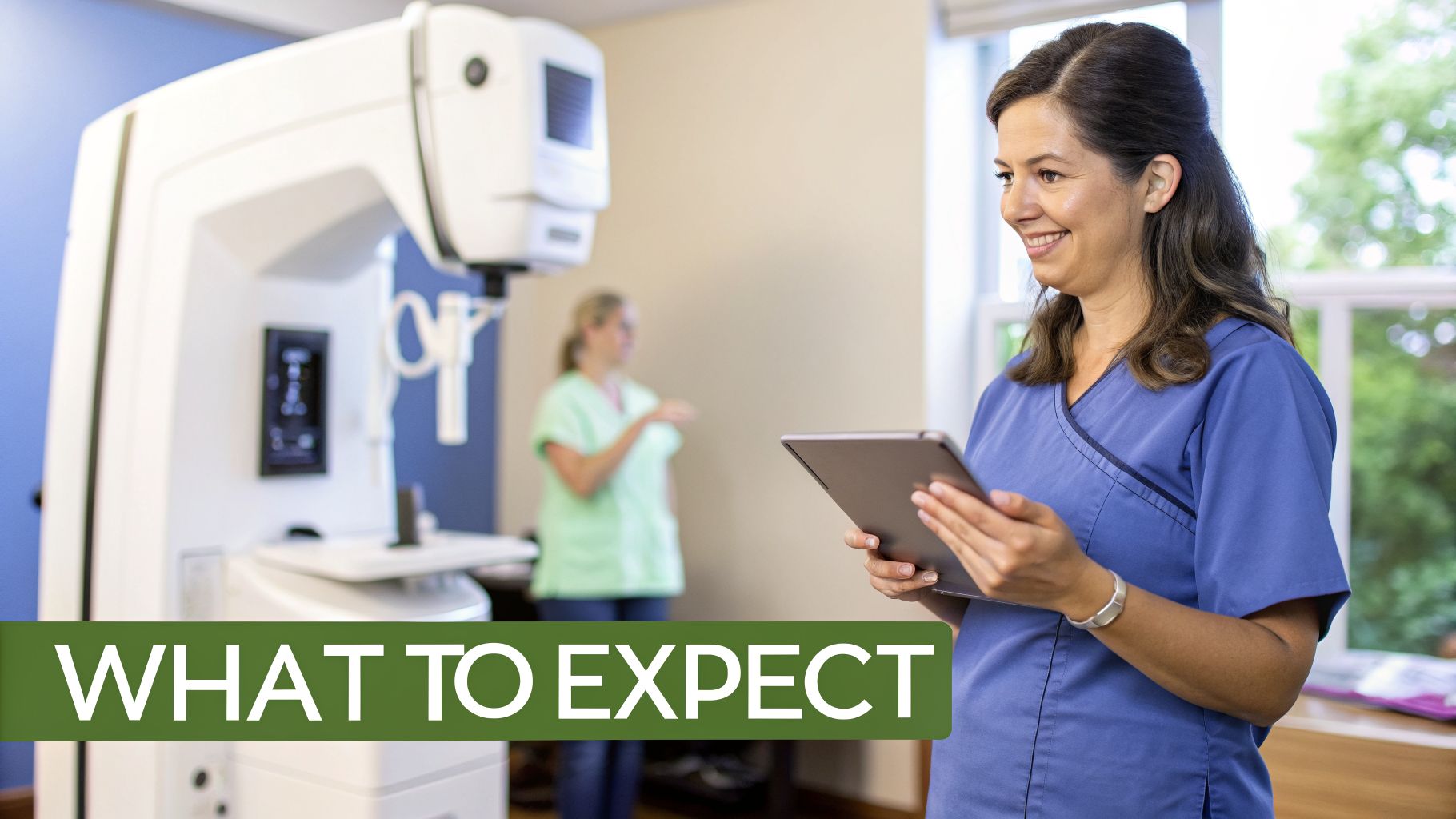
If you’ve never had a mammogram before, it’s completely normal to feel a bit apprehensive. The unknown can be daunting, but the whole process is actually very quick and straightforward. From start to finish, the appointment itself usually takes no more than 20 minutes.
You’ll be in the hands of a specially trained healthcare professional, often a female mammographer, whose job is to guide you through everything and make you feel as comfortable as possible. They’ll show you to a private changing area where you can undress from the waist up and will give you a soft gown or wrap to wear.
Preparing for Your Appointment
A couple of simple tips can make your appointment go that much smoother. We always suggest wearing a two-piece outfit—like a top with a skirt or trousers—so you only need to remove your clothing on top. It’s a small thing, but it often helps people feel much more at ease.
Here’s another really important tip: avoid using deodorant, antiperspirant, or lotion on your breasts or underarms on the day of your scan. Many of these products contain tiny metallic particles that can appear on the mammogram as white spots, which can be mistaken for calcifications. For the clearest, most accurate results, it's best to have clean, product-free skin.
Let's talk about the part most people worry about: the compression. It can be uncomfortable, but it only lasts for a few seconds. That brief pressure is absolutely vital for spreading out the breast tissue to get a clear image where even the smallest changes can be seen.
The Mammogram Procedure and Results
During the scan, the mammographer will help you position one breast at a time on the X-ray machine. A clear plastic plate will then press down firmly for just a few seconds while the image is taken. This is repeated to get two different views of each breast, usually one from above and one from the side.
Once your scan is complete, the process for getting your results will depend on whether you’re with the NHS or a private clinic.
- NHS Screening: Results are typically sent by post to your home address within two to three weeks. Your GP will receive a copy as well.
- Private Screening: The turnaround is often much faster, sometimes within just a few days. You will also usually have a follow-up consultation to discuss the report in detail.
No matter which mammogram screening age or route you take, the goal is always the same—to get a clear picture of your breast health and catch any potential issues as early as possible.
Your Breast Health Action Plan
Knowing when to start having mammograms is a great first step. But what really makes a difference is turning that knowledge into a clear, personal plan. It’s about more than just booking an appointment; it's about combining smart screening with lifestyle choices that help lower your risk for the long haul.
This is where a proper, in-depth consultation comes in. Generic advice just doesn't cut it. At The Lagom Clinic, we set aside the time to sit down with you and look at your entire health picture – your family history, your lifestyle, and your concerns. From there, we can map out a screening plan that’s right for you and, if needed, get you a fast referral for a private mammogram.
Being proactive about your health isn't about passively waiting for a screening invitation. It’s about understanding your personal risk and making informed choices to protect your future.
Looking Beyond the Scan: A Broader Approach to Lowering Risk
Screening is crucial for catching problems early, but it’s only one piece of the puzzle. The most effective approach brings everything together: screening, nutrition, exercise, and even stress management. Think of them as interconnected pillars supporting your long-term health.
This is exactly what we mean by 'lifestyle medicine'. It’s about making small, sustainable changes that can have a big impact on your future risk. These are the kinds of proactive steps we can work on together:
- Your Diet: We can explore how to build an eating plan full of anti-inflammatory foods, such as leafy greens, berries, nuts, and oily fish. Focusing on a diet rich in fibre from fruits, vegetables, and whole grains is scientifically shown to be protective.
- Managing Stress: We'll find practical techniques to handle chronic stress, as high cortisol levels can affect your hormones and overall health. This could include mindfulness, yoga, or simply scheduling time for relaxation.
- Moving Your Body: It’s about finding physical activity you genuinely enjoy. A consistent routine not only helps maintain a healthy weight and balances hormones but also boosts your immune system.
Putting all these elements together gives your body a much stronger defence system. It’s not just about scheduling one mammogram; it's about building a lifestyle that supports your breast health, year after year.
Frequently Asked Questions About Mammograms
It's completely normal to have questions as you start thinking about breast screening. To help you feel more informed, we've put together answers to some of the most common queries we hear from women about mammograms and their personal risk factors.
Does Having Dense Breasts Affect My Screening Schedule?
Yes, it can make a significant difference. Think of a mammogram as a black-and-white picture. Fatty tissue shows up as dark grey, making it easy to see any potential problems, which often appear as white spots. Dense breast tissue, however, also looks white on the scan. This can create a 'camouflage' effect, making it much harder for a radiologist to spot a small, developing cancer.
On top of that, having dense breasts is also considered an independent risk factor for developing breast cancer. If you're told you have dense breasts after a mammogram, it's really important to have a conversation with your doctor. They might suggest additional screening, like a breast ultrasound or MRI, to get a clearer picture.
It’s worth knowing that almost half of all women over 40 have dense breasts. Discovering your breast density isn't a cause for alarm; it's a vital piece of information that helps you and your doctor build the right screening plan for you.
What Lifestyle Changes Can I Make to Lower My Risk?
While we can’t change our genes or family history, there are definitely proactive steps you can take to lower your overall breast cancer risk. The evidence is clear that focusing on a few key areas of your life can have a powerful, positive impact.
These evidence-based actions include:
- Maintaining a healthy weight through a balanced diet and regular exercise, which is particularly important after menopause.
- Staying active and aiming for at least 150 minutes of moderate exercise each week. This helps regulate hormones and supports a healthy immune system.
- Limiting how much alcohol you drink, as even moderate consumption increases risk. If you smoke, seeking support to stop is one of the best things you can do for your overall health.
- Eating a balanced diet rich in fibre, fruits, vegetables, and whole grains. Limiting red and processed meats can also be beneficial.
Of course, fitting these healthy habits into a demanding schedule isn't always easy. That’s why knowing how to balance work and personal life effectively is more than just a wellness trend—it's a practical part of looking after your long-term health. A specialist in lifestyle medicine can work with you to create a sustainable plan that fits your life.
At The Lagom Clinic, we take the time to truly understand your personal health profile, answer all your questions, and create a proactive screening and wellness plan that puts you in control. Book your consultation today at https://thelagom.co.uk.
Taking charge of your health after 40?
Mammogram screening is just one part of proactive midlife health. Our menopause clinic in Bristol provides comprehensive hormone testing, bone health checks, and personalised care plans.

 Members Consultation