


You've been told you may need a CT scan, and now you're stuck between two frustrations. The NHS route may be sensible but not always quick for non-urgent problems. The private route may be faster, but the price often feels deliberately vague.
That confusion is understandable. CT has become a routine part of modern diagnosis, and demand has risen sharply. In England, CT examinations increased from 5.1 million in 2013/14 to 8.3 million in 2022/23, a 63% rise, which helps explain why both NHS and private imaging services are under pressure and why rapid private access has become more visible in the market (OECD diagnostic technologies data).
A good decision about CT scan cost isn't just about finding the cheapest scanner. It's about deciding whether the scan is the right test, what the full private pathway will cost, and whether paying for speed will change your care.
Navigating the Need for a CT Scan
Patients don't typically start by asking for a CT scan. They start with a symptom. Ongoing headaches. Chest symptoms that need a closer look. Abdominal pain that hasn't settled. A sports injury where the clinical picture still isn't clear.
CT is useful because it's fast, widely available, and excellent for certain questions. It can help doctors assess lungs, sinuses, kidneys, some injuries, and urgent internal problems quickly. But that doesn't mean every ache, pain, or niggle needs one.
Why so many people are looking at private imaging
The rise in CT use reflects real clinical value. It also creates a practical problem for patients. If demand rises, waiting and triage become stricter. That's one reason private providers promote direct access and quick turnaround.
If your concern involves spinal shape or posture-related imaging, it's also worth reading about understanding scoliosis imaging, because the right scan depends on the clinical question. In many cases, CT isn't the first or best choice.
For some symptoms, the better comparison isn't NHS versus private. It's CT versus another test entirely. If you're not sure which imaging route fits your situation, this guide on CT scan v MRI is useful before you spend money on the wrong investigation.
A fast scan is only valuable if it answers the right question.
What patients should focus on first
Before you worry about price, ask three things:
- What is the doctor trying to rule in or rule out? A scan should answer a specific clinical question.
- Will the result change treatment? If management won't change, the scan may not be worth paying for.
- Is CT the right modality? Sometimes MRI, ultrasound, blood tests, physiotherapy assessment, or simple watchful waiting are more sensible.
That approach saves money and usually leads to better care.
NHS vs Private Scans The Two Main Pathways
The UK gives you two broad routes to a CT scan. Both can be appropriate. They serve different priorities.

The NHS pathway
The NHS route is built around clinical need. The NHS makes clear that CT is usually arranged when it's clinically needed, and NHS hospital care is funded at the point of use. If your symptoms suggest urgency, this is often the right route.
The strengths are obvious:
- No direct scan charge to the patient
- Strong clinical gatekeeping
- Clear integration with onward NHS care
The trade-off is speed for less urgent cases. If your symptoms are important but not immediately dangerous, you may wait longer than you'd like. That's frustrating, but it's also how the NHS protects access for people with the highest-risk presentations.
The private pathway
Private imaging is attractive for one reason above all others. It's often quicker.
You may get more flexibility over appointment timing, provider choice, and when your report comes back. That can be valuable if you're trying to keep working, travel, compete in sport, or stop a health worry from dragging on for weeks.
But private imaging has drawbacks:
- You may need to pay out of pocket
- Quotes aren't always all-inclusive
- You still need proper clinical oversight
Private medical insurance can sometimes help, but don't assume it will remove every charge. Excesses, policy restrictions, pre-authorisation, and referral rules still matter.
Which route makes sense
The choice usually comes down to this short comparison:
| Pathway | Best for | Main advantage | Main downside |
|---|---|---|---|
| NHS | Urgent or clearly indicated medical needs | No direct cost at point of use | Non-urgent waits can be longer |
| Private | Faster access and scheduling flexibility | Speed and convenience | Cost and variable pricing |
Practical rule: Use the NHS when timing won't change the outcome. Consider private imaging when faster answers are likely to affect treatment, work, travel, or peace of mind in a meaningful way.
What Factors Determine Private CT Scan Cost
There is no single UK price for a private CT scan. That's the first thing to accept.
Published hospital pricing shows that private CT prices can differ several-fold between UK hospitals and regions, and that variation depends heavily on the body area scanned, whether contrast is used, and the provider itself (price transparency review of CT scans). In one series, brain CT prices ranged from roughly £316 to £343 at some hospitals, while other UK examples reached much higher levels depending on scan type and payer rate, which tells you exactly why vague online averages are often misleading.

The body area matters
A quick, focused scan of one area is not the same as a more complex study covering multiple structures. A head CT, chest CT, CT abdomen and pelvis, or CT angiography all involve different protocols and different clinical workloads.
That's why asking “How much is a CT scan?” is too broad. Ask for the exact scan name.
Contrast changes the price
Contrast is one of the biggest cost drivers. It usually means more preparation, more staff time, more consumables, and extra safety checks. If kidney function needs checking first, that can add another step to the pathway.
A classic cost analysis found a mean technical cost of less than $200 per diagnostic CT, with non-enhanced CT at $150, contrast-enhanced CT at $237, and interventional CT at $462 (technical CT cost analysis on PubMed). The useful lesson isn't the currency. It's the pattern. The scanner itself isn't the main reason prices rise. Procedural complexity is.
Provider and location shape the quote
A private imaging centre in a major city won't necessarily charge the same as a hospital in another region. Local demand, staffing, operating model, and reporting arrangements all influence the fee.
Here's what usually shifts the number upward:
- Central location with higher overheads
- Hospital-based service rather than a stand-alone imaging centre
- Specialist reporting by a subspecialist radiologist
- Rapid turnaround for same-day or urgent reports
The report is part of the product
Patients often think they are paying for “the scan”. In reality, they are paying for a package of steps: booking, radiographer time, protocol selection, image acquisition, radiologist interpretation, and sometimes administrative coordination with your referrer.
That's why two quotes for the “same” scan can still differ. One may include the report, and another may not make that obvious until later.
If a provider can't explain what is and isn't included, don't book yet.
Questions to ask before you commit
Use this checklist when comparing providers:
- What exact scan has been requested? Ask for the proper study name.
- Is contrast included or excluded? Don't assume.
- Does the quoted fee include the radiologist's report? It should be explicit.
- Will I need a separate consultation before or after? That can materially change your total spend.
- How quickly will results be available? Useful if time matters to you.
UK Private CT Scan Price Ranges A Practical Guide
You have a referral in your hand, you want an answer quickly, and the first question is simple. What will this cost me?
Patients understandably want a single, clear number for CT scan costs. Private providers rarely work that neatly. The useful way to budget is to start with realistic UK ranges, then check exactly what is included before you book. That matters because the actual spend is often the scan plus the report, and sometimes a referral review or contrast fee on top.
Sample private CT scan costs in the UK
Use these figures as a planning guide, not a final quote.
| Scan Type | Price Range (Without Contrast) | Price Range (With Contrast) |
|---|---|---|
| Head CT | £250 to £450 | £350 to £550 |
| Chest CT | £300 to £500 | £400 to £650 |
| Abdomen and pelvis CT | £450 to £750 | £600 to £950 |
Those ranges are broad because the market is broad. They are still far more useful than blank labels such as “varies by provider”, and they reflect the pattern patients usually see in real quotes across UK private imaging.
A low headline price can still be poor value. If the radiologist's report is delayed, contrast is billed separately, or you need another appointment just to release the request, your total pathway cost climbs quickly.
How to use this table properly
Start with the body area, then ask what problem the scan is meant to answer. A focused non-contrast head CT for a specific indication usually sits at the lower end. A contrast-enhanced abdomen and pelvis study, especially if arranged quickly, usually sits much higher.
Combined areas generally cost more than a single-region scan. Urgent slots also tend to cost more.
The right question is not “what is the cheapest CT?” It is “what is the cheapest route to a useful answer?”
That is why I advise patients to compare providers using the likely full spend:
- Scan fee
- Contrast fee, if needed
- Radiologist report
- Referral or clinician review fee
- Any follow-up needed to act on the result
If a provider quotes £320 and another quotes £480, the second may still be the better buy if it includes the report, prompt reporting, and a pathway that lets your clinician act on the result without delay.
If you're comparing private health costs more broadly, Insight Diagnostics Global ADHD assessment pricing is a useful example of why itemised pathways matter more than one attractive headline figure.
My recommendation
Budget for the whole episode, not just the machine time.
Before you book, ask for the exact scan name, whether contrast is expected, whether the report is included, and what the total payable amount is likely to be from referral to result. That approach protects you from low-value bargains and helps you decide whether a private CT is worth paying for.
Is a Private CT Scan Medically Worth the Cost
Sometimes yes. Sometimes absolutely not.
A fast private scan can be money well spent when it changes what happens next. If a result will alter treatment, speed up specialist referral, or rule out something serious that needs action, the expense may be justified. But if the scan is unlikely to change management, paying privately can become an expensive way to buy temporary reassurance.
When paying privately can make sense
Private CT is often easier to defend when:
- Symptoms are persistent and clinically concerning
- A specialist decision depends on imaging
- Timing affects work, travel, sport, or urgent planning
- You've already had proper assessment and CT is clearly the next step
This is especially true when the question is narrow and practical. For example, a clinician may need to assess a suspected stone, look for sinus disease in a very specific context, or evaluate a body area where CT is the established tool.
When it may be low-value imaging
Many patients waste money. Not because they've done anything foolish, but because the market often sells access before value.
A review cited in consumer-facing healthcare analysis found that reducing low-value imaging can cut costs by up to 95% in some scenarios without harming patients, and avoiding routine preoperative chest X-rays can reduce costs by 88% (discussion of low-value imaging and cost reduction). The point is simple. Some scans don't help enough to justify the spend.
Common examples where caution matters:
- Non-specific low back pain without red flags
- Routine headaches without concerning features
- Minor sports injuries where examination and rehabilitation matter more at first
- General screening without a clear indication
Speed is not the same thing as value.
Better questions than “Can I book it?”
Ask these instead:
- What diagnosis are we considering?
- Why CT rather than MRI or ultrasound?
- What happens if the scan is normal?
- Will the result change treatment in the next few weeks?
If the answers are weak, hold off.
Don't ignore lifestyle and conservative care
A good imaging decision often sits inside a bigger care plan. For musculoskeletal symptoms, that may mean activity modification, guided strengthening, sleep optimisation, anti-inflammatory strategies where appropriate, and a structured rehabilitation plan. For headaches, hydration, sleep regularity, blood pressure review, medication review, caffeine habits, and stress management may be more valuable than early imaging.
That isn't a brush-off. It's good medicine.
Some patients need a scan urgently. Others need time, examination, and a smarter first-line approach. The most cost-effective CT scan is the one that is both clinically justified and timed properly.
How to Arrange a Private CT Scan Step by Step
You've paid for speed, then realised nobody has pinned down the right question, the true price, or who will explain the result. That is how private imaging becomes expensive and low value.
Once you've decided a private scan is justified, keep the process tight and organised. Book the right pathway, not just the machine.
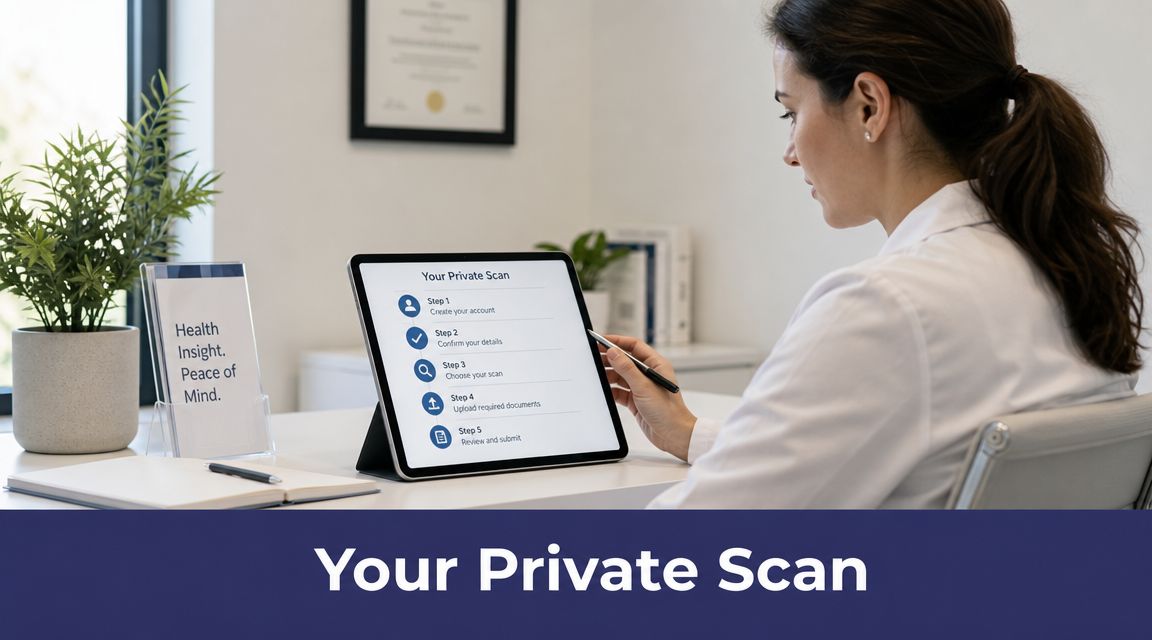
Step 1 Get a proper referral
Start with a referral that answers a clear clinical question. Private CT works best when a GP or specialist sets out the symptom, duration, any red flags, relevant examination findings, and exactly what the scan needs to confirm or exclude.
This protects you from paying for the wrong test or the wrong body area. It also gives the radiology team enough detail to choose the correct protocol first time.
Step 2 Ask for the full pathway cost
Do not accept a headline scan fee on its own. The actual cost often includes more than the slot in the scanner, and that total determines whether private imaging is good value.
A private pathway may include the referral review, the CT scan, contrast, the radiologist's report, and a follow-up appointment to interpret the findings, as outlined in this breakdown of the private imaging pathway cost.
Ask for an all-in estimate covering:
- Referral or consultant review
- The CT scan itself
- Contrast, if needed
- Radiologist reporting
- Follow-up discussion of results
If you also want a realistic sense of timing, this guide on how long a CT scan takes helps set expectations for the appointment day.
Step 3 Confirm the details that affect cost and usefulness
Small practical details can change both the bill and the value of the scan.
- Check preparation requirements. You may need fasting or a kidney function blood test if contrast is likely.
- Confirm reporting time. A same-week scan with a delayed report may not change your care quickly enough to justify private fees.
- Ask what you receive. You should know whether you get the written report, the images, and a clear route for questions after the result lands.
Step 4 Arrange follow-up before the scan happens
A CT report on its own is rarely the finish line. It needs context. A normal scan may still leave symptoms unexplained. An abnormal scan may trigger another test, treatment, or referral. That next step is part of the pathway cost, whether you budget for it now or not.
Book the follow-up discussion at the same time as the scan if possible.
Clinical advice: Never pay for imaging unless you already know who will explain the result and what decisions they'll make from it.
Your Next Steps for Rapid Imaging in Bristol
If you're weighing CT scan cost, keep the decision simple. First, make sure the scan is the right test. Second, decide whether faster access will change your care. Third, ask for the full pathway price, not just the headline scan fee.
That last point matters most. A cheap-sounding quote can become less attractive once contrast, reporting, and follow-up are added. A more expensive quote may be better value if it includes proper interpretation and a clear plan.

A sensible decision framework
Use this quick filter:
| Question | If yes | If no |
|---|---|---|
| Is the scan clinically justified? | Move to pricing and booking | Reassess whether imaging is needed |
| Will faster access change management? | Private may be worth it | NHS may be more sensible |
| Do you have an all-in quote? | Compare providers properly | Don't book yet |
For many people in Bristol, the best route isn't “NHS good” or “private good”. It's targeted. Use the NHS when time won't change outcomes. Pay privately when timing, clarity, and continuity matter.
Good care is measured by what happens after the scan as much as by the scan itself. The report needs context. The symptoms need explanation. The plan needs to fit your work, family life, training, and budget.
If you want help deciding whether a CT scan is worth paying for, and what the full pathway is likely to involve, book an appointment with The Lagom Clinic. A thorough GP review can help you choose the right test, avoid low-value imaging, and build a practical plan around the result rather than ordering a scan.


 Members Consultation