


If you've been told to fast before a blood test, the usual preparation is 8 to 12 hours with plain water only. The reason is simple: it helps your blood sample reflect a steadier baseline, especially for tests such as glucose and triglycerides, which can change after you eat.
If you're reading this while checking tomorrow's appointment time, wondering whether a splash of milk in coffee “counts”, you're not alone. Fasting instructions often arrive in a short email or booking message, but the practical questions show up later, usually when your day is already full and you're trying to fit healthcare around work, school runs, exercise, or travel.
A lot of patients assume fasting is a rule for every blood test. It isn't. Some tests need that empty-stomach snapshot. Many don't. The tricky part is knowing which is which, and how to get through the fasting window without making the morning harder than it needs to be.
That 'Fasting Required' Email and What It Really Means
You book a blood test for Tuesday. Then the message lands: fasting required. Suddenly the questions start. Can you drink coffee? Should you skip the gym? What if your appointment is at 11am and you have a packed morning of meetings?
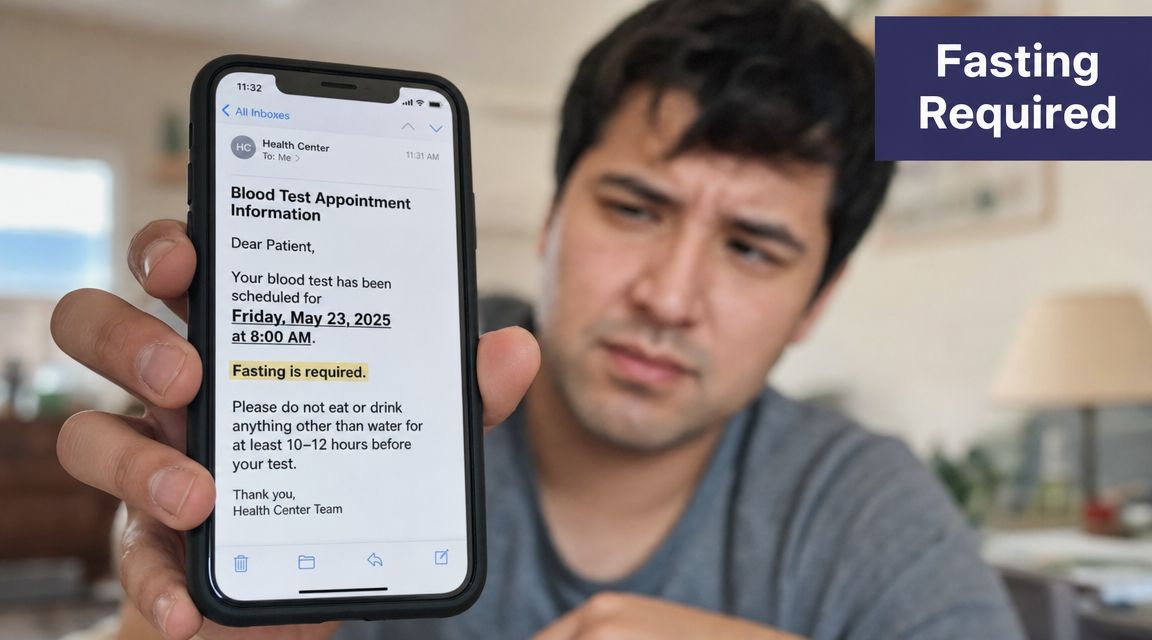
That uncertainty is common, and it isn't because patients are careless. The instructions are often brief, and many people have had blood tests before without needing to prepare in any special way. In a study of fasting outpatients, nearly 50% believed fasting was important for every blood test, while only 24.9% said their healthcare team had told them to fast (study on confusion around fasting instructions).
Practical rule: If your clinician or clinic hasn't clearly told you that your specific test needs fasting, don't assume it does.
What fasting actually means
For blood tests, fasting usually means no food and no drinks except plain water for the instructed period. It does not mean “eat lightly”, “skip breakfast only”, or “have a black coffee and hope for the best”.
When patients say they plan to fast before a blood test, they often mean one of three different things:
- Skipping breakfast only. This may or may not be long enough.
- Avoiding food but still having tea or coffee. That can affect some results.
- Not eating all day before a late appointment. That's often unnecessary and miserable.
Why this matters in real life
Busy professionals often make fasting harder than it needs to be by choosing a mid-morning or lunchtime slot. Parents sometimes fast unnecessarily because a family member once had to. Shift workers may guess and get caught out.
The safer approach is simple. Confirm whether fasting is required for your test, then plan the timing so the fasting period happens mostly while you're asleep. That turns a stressful instruction into a manageable routine.
Why Some Blood Tests Need a 'Fasting' Snapshot of Your Health
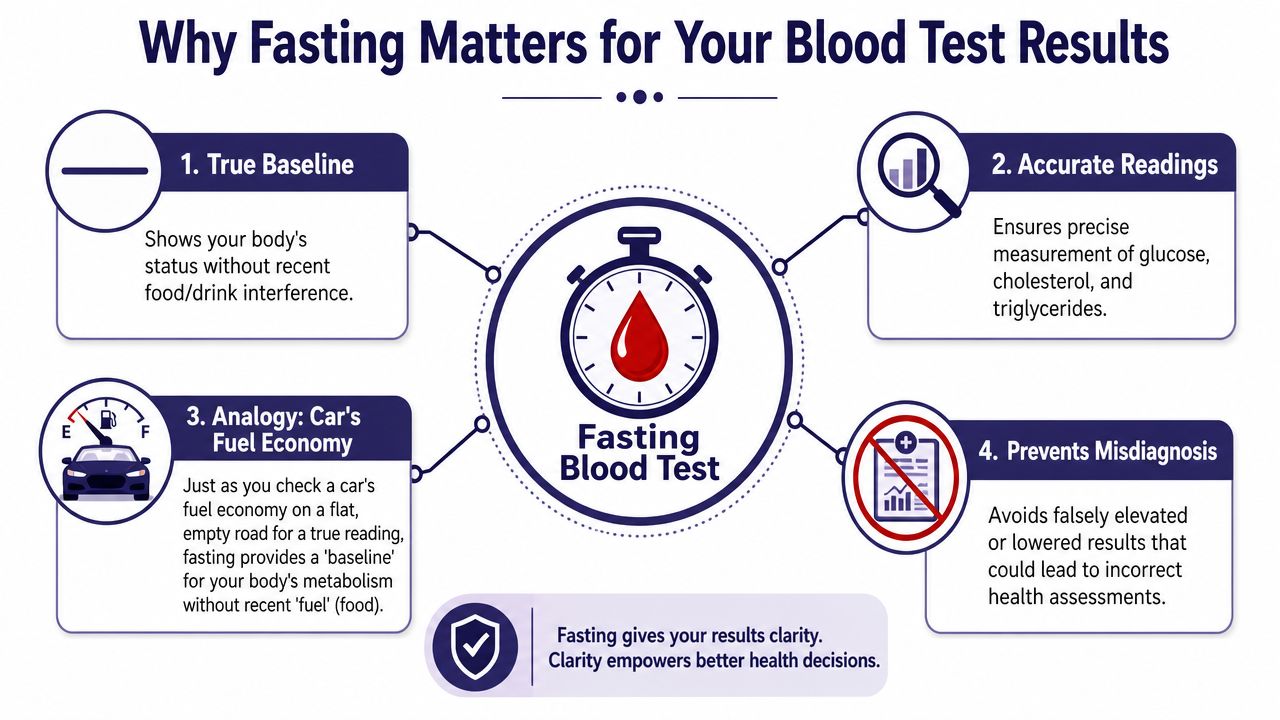
A fasting blood sample gives us a cleaner starting point. It's similar to checking a car on a level surface after it has settled, rather than halfway through a long drive. We're trying to see what your body chemistry looks like without the short-term effects of your last meal.
Recent food intake can temporarily change certain substances in the blood. The two markers most sensitive to this are glucose and triglycerides (Harvard Health guidance on which tests require fasting). If you've eaten recently, those values may reflect the meal more than your underlying metabolic baseline.
The main reason is stability
If I'm checking a fasting glucose or trying to interpret triglyceride-rich lipids, I want the result to be as standardised as possible. A controlled fasting interval reduces the “noise” created by recent eating and drinking.
That doesn't mean fasting is automatically better for every test. In fact, fasting requirements have become narrower in some settings because modern testing methods can still be reliable after shorter fasting periods. But for the specific markers most affected by meals, fasting still gives the clearest reference point.
A fasting sample isn't about making the test more serious. It's about making the result easier to trust.
What patients often misunderstand
People sometimes hear “fasting blood test” and assume all food is the only issue. In reality, the goal is to avoid anything that shifts blood chemistry away from that baseline state. That's why plain water is fine, but other drinks aren't.
A simple example helps. If you eat toast, cereal, fruit, or even a “healthy” yoghurt before a glucose test, your body responds to that food. If you have a rich takeaway the night before and then a short fasting window, triglycerides may still be less straightforward to interpret. The rule isn't punitive. It's there so your clinician can make a more confident decision based on the result.
Which Common Blood Tests Require Fasting
The fastest way to reduce stress is to separate the tests that usually do need fasting from the ones that usually don't. That word “usually” matters, because your clinician may ask for a specific preparation based on your symptoms, medicines, or the exact panel being ordered.
A quick comparison
| Blood Test Name | Fasting Typically Required? | Purpose |
|---|---|---|
| Fasting glucose | Usually yes | Checks blood sugar in a standardised fasting state |
| Triglycerides | Usually yes | Assesses a blood fat that can change after eating |
| Lipid panel where triglycerides are important | Often yes | Helps interpret cholesterol and triglyceride-related markers |
| Full blood count | Usually no | Looks at red cells, white cells, and platelets |
| Thyroid function tests | Usually no | Assesses thyroid hormone activity |
| Kidney function tests | Usually no | Checks markers used to assess kidney health |
| Liver function tests | Usually no | Reviews enzymes and proteins linked to liver health |
| HbA1c | Usually no | Gives a longer-term picture of glucose control |
The practical takeaway
If your form mentions glucose or triglycerides, ask whether fasting is required if it hasn't been made explicit. For many other common blood tests, fasting may not be necessary.
That's useful for people trying to fit healthcare into a busy schedule. If your clinician is checking thyroid function, iron status, blood count, kidney function, or a general wellness panel, you may not need to rearrange your entire morning around an empty stomach. If you're also trying to make sense of the numbers afterwards, this guide to deciphering your lab reports gives a helpful plain-English overview of how results are often presented.
When it's worth double-checking
A few situations deserve a quick confirmation call or message:
- Combined panels: One fasting-dependent test can change the preparation for the whole appointment.
- Corporate health screening: These often bundle several tests together.
- Private testing: The package name may not tell you exactly which markers are included.
If you're booking a broader chemistry panel, it helps to review the exact test details rather than guessing from the appointment label. A clinic page on biochemistry blood testing can help you understand what may be included before you attend.
Your Step-by-Step Guide to Fasting Correctly
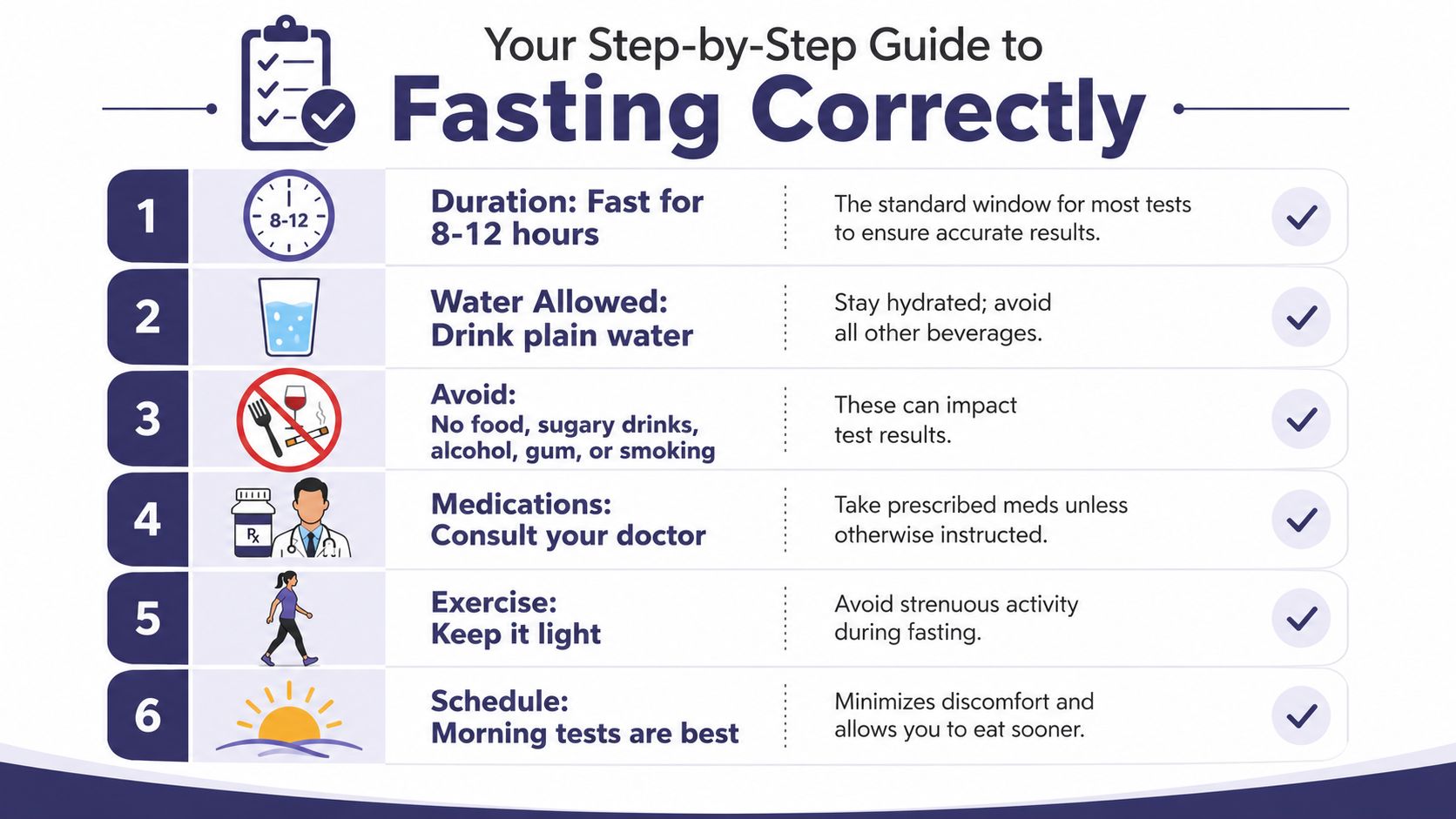
Done properly, fasting is usually straightforward. The standard preparation is 8 to 12 hours with plain water only, and clinics often suggest an early morning appointment so most of that time happens overnight. Some guidance also recommends avoiding alcohol for 24 hours beforehand (MedlinePlus fasting guidance).
The easiest schedule for a workday
Generally, the least disruptive plan is:
- Eat your evening meal as normal.
- Start fasting after that meal, based on the timing your clinic gave you.
- Drink water in the evening and the next morning.
- Book the blood draw early.
- Bring breakfast or plan a proper meal for straight afterwards.
That approach works well because you sleep through much of the fasting window. It also reduces the temptation to grab coffee on the way to the office.
What you should do
- Drink plain water: Hydration helps. It can also make the blood draw easier.
- Choose a morning slot: This is the simplest way to fast before a blood test without disrupting your whole day.
- Keep the evening before ordinary: Don't “prepare” by overeating or having a heavy celebration meal.
- Avoid alcohol the day before: If your clinic has advised this, follow it carefully.
- Keep activity gentle: A normal walk is fine. Save the hard training session for later.
Best approach: Set an alarm label on your phone that says “water only from now”.
What to avoid
- Food of any kind: Even a small snack can defeat the purpose.
- Tea and coffee: Patients often ask about black coffee, but if the instruction is fasting, stick to water only.
- Juice, smoothies, fizzy drinks, and milk: These all count as intake beyond water.
- Chewing gum or sweets: They're easy to overlook.
- Smoking if you can avoid it before the test: If this is relevant to you, mention it to the clinic when confirming instructions.
A realistic evening-before routine
If you've got an early meeting, children to organise, or a commute, make it easy on yourself the night before. Lay out your clothes, keep a bottle of water by the bed, and decide in advance what you'll eat afterwards. A yoghurt pot in your bag, overnight oats in the fridge, or breakfast booked near work can spare you that shaky, rushed feeling after the blood draw.
This is also where lifestyle habits matter. If you regularly leave health admin until late, fasting instructions can feel more stressful than they need to. Booking earlier in the day, reducing alcohol the night before, and avoiding a late heavy meal are small changes that make the whole process smoother and the result more dependable.
Navigating Special Cases and Common Mistakes
Most fasting instructions are simple. The problems start with the exceptions.
If you have diabetes
If you take insulin or diabetes medication, don't guess your way through a fasting test. Speak to your GP or the clinician who ordered the bloods about how to manage the fast safely. For some people, fasting can increase the risk of low blood sugar, especially if the appointment is delayed.
Bring glucose treatment with you unless you've been told otherwise, and let the phlebotomist know that you have diabetes when you arrive. If you start to feel unwell, sweaty, shaky, or confused, safety comes first.
If you take regular medication
Many prescribed medicines can often be taken with water, but the right advice depends on what you take and why you take it. If a medicine must be taken with food, or if the blood test is meant to measure the effect of that medicine, the timing may need adjusting.
A good rule is to ask these two questions before the day:
- Should I take my usual morning medication before the test?
- Should I stop any supplements beforehand?
Write the answer down. Don't rely on memory at 6.30am.
If the clinic's instructions are unclear, ask before the appointment day. Last-minute guesswork causes more rescheduling than most patients realise.
If you accidentally eat or drink
This happens often. Someone sips coffee automatically. A parent finishes a child's toast crust. A commuter grabs a cappuccino out of habit.
If that happens, be honest. Don't stay silent and hope it won't matter. Contact the clinic and tell them exactly what you had and when. Depending on the test, they may advise going ahead, noting it on the request, or rescheduling. Rescheduling can be inconvenient, but it's often better than getting a result that creates confusion or has to be repeated anyway.
How The Lagom Clinic Makes Blood Tests Simple and Clear
For busy patients, the hardest part of fasting blood tests usually isn't the needle. It's the admin around it. Clear instructions, sensible appointment timing, and a straightforward booking process matter more than people expect.

A clinic that offers early appointments, explains whether fasting is necessary, and provides on-site blood testing removes a lot of avoidable friction. That matters if you're trying to organise testing around a demanding job, school drop-off, training, or travel. It also matters if you've had mixed messages before and want a more individual answer than a generic reminder text.
For people comparing options, private blood testing in the UK can be useful to review in advance, especially if you want to understand what standalone testing can include and how to plan it around your schedule. And if you've ever mixed up preparation rules between blood tests and imaging, this guide from Hera Fertility for ultrasound insights is a helpful reminder that different tests have different fasting rules.
When patients ask me how to make fasting easier, my answer is usually practical rather than dramatic. Book the earliest slot you can manage. Confirm whether your specific test really requires fasting. Put the instruction in your calendar the night before. Keep water nearby. Plan breakfast for afterwards. Those simple steps reduce errors and make the morning feel routine instead of stressful.
Used this way, fasting becomes just one part of organised preventive care rather than a disruption to your week.
If you'd like clear, personalised advice about how to prepare for blood tests, or you want a convenient private option that fits around work and family life, you can book with The Lagom Clinic. A good clinic should tell you plainly whether fasting is needed, help you time the test sensibly, and make the whole process feel manageable from booking to results.
Considering a Full Health Check?
Our private health screenings in Bristol include fasting blood panels with 30 to 150+ markers, an ECG, body composition analysis, and up to two hours with a specialist doctor. Packages start from £500 with same-week availability.


 Members Consultation