


You've probably had this moment, a GP or nurse says your liver function test is back, and you're left staring at a sheet of numbers that looks more confusing than reassuring. One result may be a little high, another looks fine, and the phrase “liver function” makes it sound as if there should be one simple answer. There isn't. A liver function test, usually shortened to LFT, is really a panel of blood markers that tells a story about liver injury, bile flow, and how well the liver is making and processing important proteins, as described in UK clinical practice and lab medicine guidance Mayo Clinic, NHS Specialist Pharmacy Service, and reference interval sources NCBI Bookshelf.
That distinction matters because people often search for what is liver function test expecting one score. In reality, the value comes from reading the pattern, not chasing a single number. If you understand what each marker is hinting at, and how lifestyle, medicines, alcohol, weight, and sleep can nudge them, the result sheet starts to feel a lot less opaque.
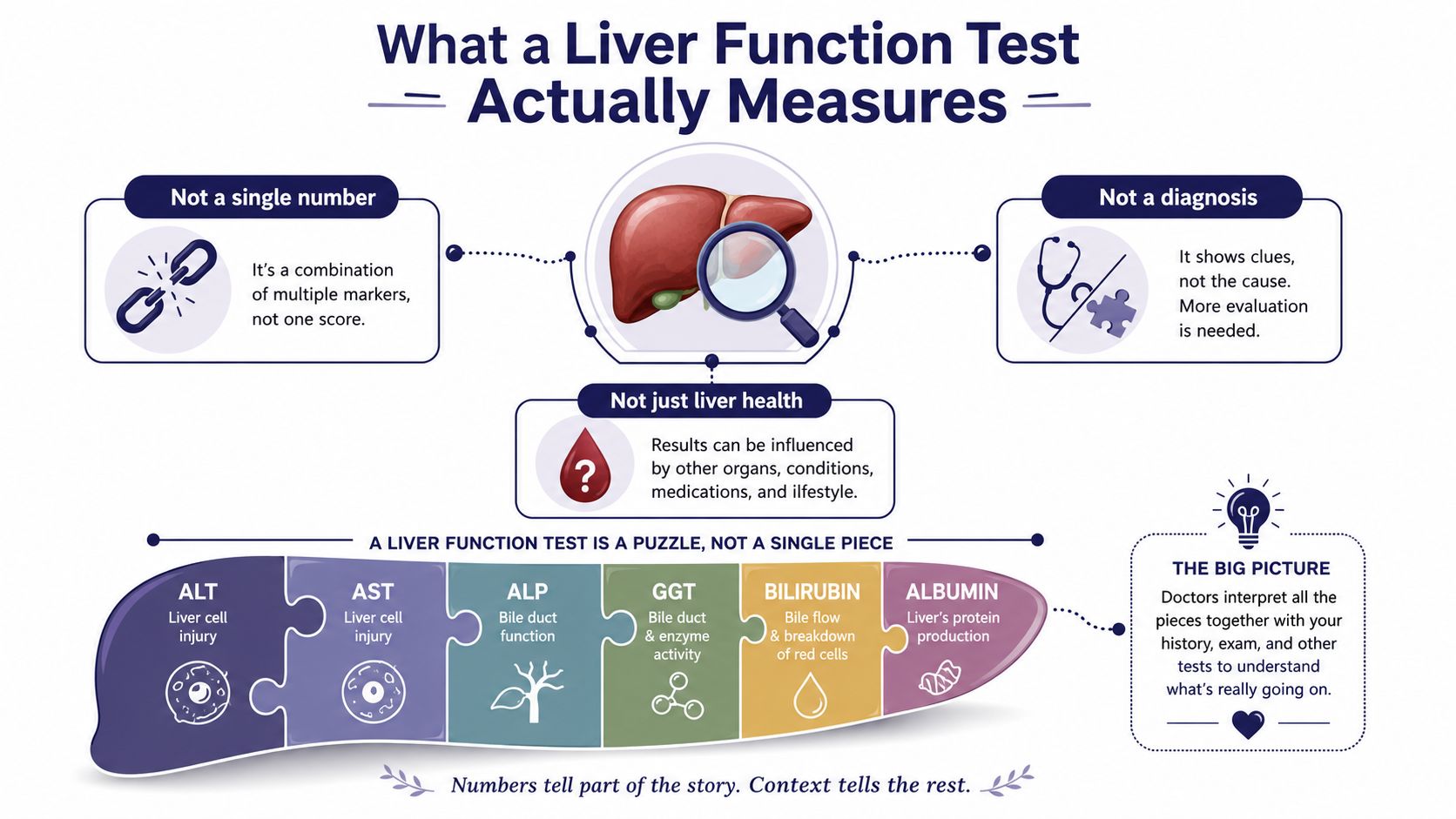
What a Liver Function Test Actually Measures
A patient often walks in saying, “My liver test came back abnormal.” In the room, the first job is to separate the label from the actual situation. An LFT panel doesn't give one verdict on liver health, it groups several markers that reflect different parts of the liver's job, which is why the same blood form can point towards injury, bile flow problems, or reduced synthetic ability NHS Specialist Pharmacy Service.
The liver does more than people think
Some markers mainly rise when liver cells are irritated or damaged. Others shift when bile isn't draining smoothly. A different group reflects whether the liver is still making proteins and clotting factors properly, which is why a “normal” looking result can still miss an active problem, and why an abnormal enzyme doesn't automatically mean the liver has lost function NHS Specialist Pharmacy Service.
That's also why people sometimes talk about a liver enzyme test when they really mean an LFT. Enzymes such as ALT and AST are only part of the picture. Bilirubin, albumin, and PT/INR tell a different story, and the interpretation changes depending on which of those is out of step Mayo Clinic.
Practical rule: don't read the sheet from top to bottom like a scoreboard. Read it like a cluster of clues.
If you're comparing your own report with a blood test summary, a broader biochemistry panel can help you see how LFTs sit alongside the rest of routine testing. A useful starting point is this biochemistry blood test guide, especially if your GP has checked more than one organ system at once.
The common reference ranges used in UK practice include ALT 7 to 55 U/L, AST 8 to 48 U/L, ALP 40 to 129 U/L, albumin 3.5 to 5.0 g/dL, bilirubin 0.1 to 1.2 mg/dL, and PT 9.4 to 12.5 seconds, although local laboratory limits vary Mayo Clinic. The exact numbers matter less than the pattern they form.
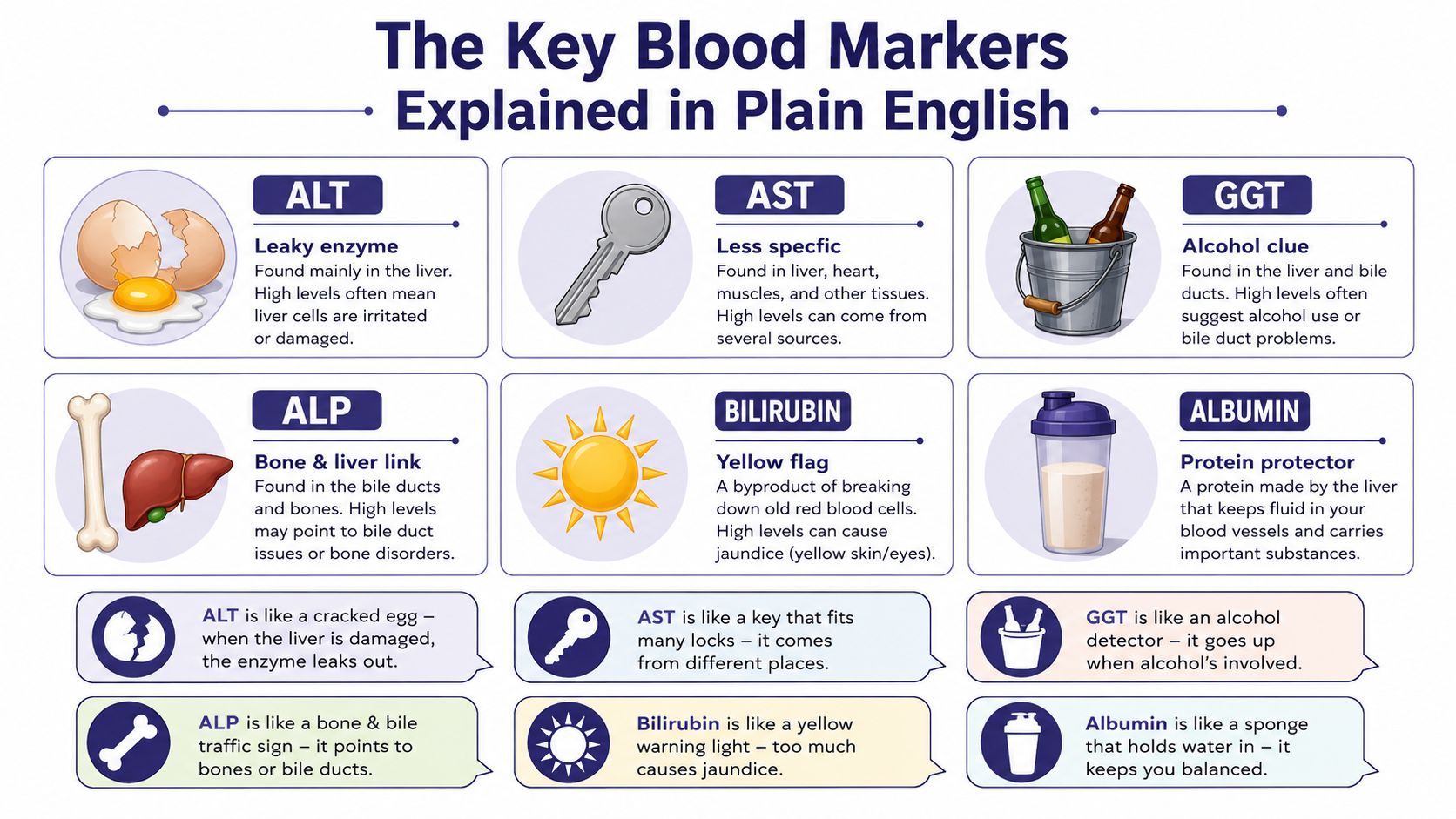
The Key Blood Markers Explained in Plain English
ALT and AST
ALT is the “leaky enzyme” people hear about most. It sits mainly inside liver cells, so when those cells are irritated, ALT can spill into the bloodstream. AST behaves similarly, but it's less specific because it also comes from muscle, so a gym session, muscle strain, or other non-liver issue can muddy the waters NCBI Bookshelf.
Think of ALT as a cracked pipe inside the liver and AST as a pipe that can leak from more than one room. If both are up, the pattern needs context, not panic. If AST is up after heavy exercise, that can fit with muscle involvement rather than liver damage alone NCBI Bookshelf.
ALP, GGT, bilirubin, albumin, and PT/INR
ALP and GGT are the “plumbing” markers. They tend to rise when bile flow is sluggish or bile ducts are involved, which is why they're often read together rather than separately NHS Specialist Pharmacy Service. Bilirubin is the yellow pigment linked to jaundice, so when it rises, people may notice yellowing of the eyes or skin NCBI Bookshelf.
Albumin is slower moving. It's a long-term sign of the liver's protein-making capacity, so it can stay normal even when enzymes are irritated. PT/INR is a clotting signal and helps show whether the liver is keeping up with clotting factor production Mayo Clinic, NHS Specialist Pharmacy Service.
Useful way to remember it: ALT and AST say “something is irritating liver cells”, ALP and GGT say “bile flow may be involved”, bilirubin says “pigment handling is changing”, and albumin plus PT/INR ask “is the liver still doing its manufacturing and clotting work?”
Reading LFT Results as a Pattern Not a Single Number
The quickest way to make sense of an LFT is to ask which group is out of line. A hepatocellular pattern means ALT and AST are the main issue. A cholestatic pattern means ALP, GGT, and often bilirubin are doing the talking. A synthetic pattern is about albumin or PT/INR, which gives a different kind of warning because it speaks to liver output rather than cell irritation NHS Specialist Pharmacy Service.
How a GP reads the sheet
Here's a common clinic conversation. A person brings in a result with a mildly raised ALT, normal bilirubin, normal albumin, and a normal INR. That doesn't read like liver failure. It reads like a possible mild hepatocellular issue that needs context, repeat testing, and a look at alcohol, medicines, weight, and recent illness rather than instant alarm Mayo Clinic.
The reverse also matters. A normal albumin or INR does not exclude active hepatocellular injury, and an isolated enzyme rise doesn't prove impaired function. That's why the panel is interpreted as a conversation between markers, not a single verdict NHS Specialist Pharmacy Service.
| Pattern | What tends to stand out | What it usually suggests |
|---|---|---|
| Hepatocellular | ALT, AST | Liver cell irritation or injury |
| Cholestatic | ALP, GGT, bilirubin | Bile flow or bile duct involvement |
| Synthetic | Albumin, PT/INR | Liver protein production or clotting function |
A borderline result is often less dramatic than it looks on the page. The pattern, the symptoms, and whether the change persists are what move the decision forward.
Common Reasons Your LFT Results Can Be Abnormal
Abnormal results usually fall into three practical buckets. The first is lifestyle, which includes alcohol, excess weight, sedentary routines, and a diet that leans heavily on ultra-processed food. The second is medicines and supplements, including paracetamol, statins, herbal products, and some antibiotics. The third is underlying disease, such as fatty liver disease, viral hepatitis, alcohol-related liver injury, and gallbladder or bile-duct problems Mayo Clinic, The Pharmaceutical Journal, NCBI Bookshelf.
What matters most for a busy person
If your day is packed, the most useful question is not “What single cause explains this?” It's “What are the likely contributors I can change this week?” Alcohol intake, weight change, long hours sitting, and medication review are the modifiable pieces you can act on without delay The Pharmaceutical Journal.
For alcohol-related questions, a practical resource on the hidden load in drinks is how much sugar is in alcoholic drinks, because what you drink often comes as a package, not just as ethanol. That matters if your weekends or work dinners are stacking up.
Why this matters for you: a raised marker is often a prompt to review habits, not proof that you've already done permanent harm.
The UK context is part of why this testing gets taken seriously. More than 40 people die each day from liver disease in the UK, the Pharmaceutical Journal reports, and it describes liver disease as the third leading cause of premature death nationally and the leading cause of death in people aged 35 to 49 years The Pharmaceutical Journal. That doesn't mean every abnormal LFT is dangerous. It does mean ignoring repeat abnormalities isn't wise.
How the Test Is Performed and What to Expect
A standard LFT is a routine venous blood draw, usually from the inner elbow. The needle part is quick, and most of the visit is just the usual clinic admin, sample labelling, and waiting for the blood tube to be processed. In private settings, results are commonly back within 24 to 72 hours, depending on the laboratory pathway and whether anything extra is added to the panel Mayo Clinic.
A few practical details make a real difference
You usually don't need to fast for a standard LFT. If the bloods are being combined with other markers, the clinic may give different instructions, so it's worth checking before you book Private Blood Tests London. Morning appointments are often easier if you want same-day decision making, but the clock itself isn't usually the issue.
Bring a clear list of medications, supplements, and recent alcohol intake. That includes over-the-counter painkillers, statins, herbal products, and any recent antibiotics, because these details change how a result gets interpreted. If you're using private care, a consultation can combine the blood draw and result discussion in one pathway, and clinics such as The Lagom Clinic in Bristol offer longer appointments, on-site blood tests, and access to broader screening if that's clinically useful The Lagom Clinic.
Why Normal Results Are Not a Free Pass
A “normal” result feels reassuring, but the number on the page is still a statistical boundary, not a guarantee. Standard reference ranges are cut-offs, and about 2.5% of healthy people will fall outside the normal range by definition The Pharmaceutical Journal. That's one reason clinicians don't use LFTs in isolation.
The other reason is that abnormalities can be transient. High liver tests are found in about 8% of the general population, and up to 30% of these increases resolve within three weeks, which is why repeat testing and context matter more than one isolated result Mayo Clinic. A single mild change can settle once alcohol intake drops, a medication is reviewed, or a short-lived illness passes.
What to do with a result that looks “almost normal”
If your LFT is normal but you have symptoms, that still deserves a conversation. If your result is mildly off but you feel well, that often points to a measured follow-up rather than urgent alarm. In both cases, the useful question is whether the pattern fits your history, including alcohol, weight, exercise, and medicines The Pharmaceutical Journal.
Normal doesn't mean “nothing to see”, it means “no obvious biochemical warning right now”.
That's why repeat testing has a real job to do. It catches persistent patterns, and it separates a temporary fluctuation from something that needs more work.
Lifestyle Changes That Support a Healthier Liver
The most practical liver plan is usually the least dramatic one. Cut alcohol back to within UK guidance, or lower if your results are already abnormal, because alcohol can push several liver markers in the wrong direction at once. Swap a heavily processed plate for a Mediterranean-style pattern built around vegetables, legumes, fish, olive oil, and more fibre, because that supports weight control and metabolic health without turning meals into a chore.
A week that actually fits around work and family
Movement matters too. Aim for 150 minutes or more of moderate activity each week, whether that's brisk walking, cycling to work, or a proper lunch break walk that's faster than wandering between meetings. Sleep matters as well, and 7 to 9 hours is a sensible target for most adults because poor sleep often spills into appetite, alcohol use, and low-energy days that make habits harder to keep [general lifestyle advice, no precise source-linked numbers beyond verified data].
If your results suggest fatty liver is part of the picture, a structured meal approach can make decisions easier. A practical option is to explore this AI meal plan if you want ideas that lean towards liver-friendly, lower-friction meals rather than another vague list of “healthy foods” AI Meal Planner.
- Alcohol check: pick two alcohol-free days this week and keep the rest intentional.
- Plate check: build dinner around vegetables, protein, and a slow carb rather than takeaway default.
- Movement check: put three brisk walks in the calendar before the week fills up.
- Sleep check: set one realistic bedtime and protect it.
- Medication check: ask a GP or pharmacist about any supplements, herbals, or repeat medicines you're using.
When to Seek Urgent Care and How to Book Private Testing
Some symptoms need same-day help, not a routine blood request. Jaundice with confusion, severe abdominal pain, or vomiting blood should be treated as urgent and assessed immediately. If you have abnormal bloods but no red-flag symptoms, a routine GP review within one to two weeks is usually the right next step, so the result can be interpreted in context rather than in a rush.
Private GP care is useful when you want the pattern explained properly and quickly. Longer appointments allow time for a full medication review, alcohol history, symptom check, and a decision about whether repeat bloods or imaging are needed. In Bristol, The Lagom Clinic offers flexible 30 to 60 minute appointments, on-site blood tests, and lifestyle and nutrition guidance built into the consultation, which fits well if you want one visit to handle both the test and the next step.
If you're weighing up what to do next, start with urgency, then convenience. Red flags need urgent care. A concerning but stable result needs a proper review, and a private appointment can make that process faster and more joined up.
If you're trying to make sense of a liver result, book a consultation with The Lagom Clinic and bring your blood test report, medication list, and recent alcohol history. A private GP can read the pattern with you, decide whether repeat testing is sensible, and build a practical plan around diet, movement, sleep, and follow-up.


 Members Consultation