


An electrocardiogram, or ECG, is a completely painless and quick test that maps out your heart's electrical activity. Think of it like a musician reading sheet music; an ECG allows your doctor to ‘read’ your heart’s rhythm and beat. This simple snapshot helps them check for a wide range of heart conditions without needing any invasive procedures. This guide will not only explain the test but also provide medically sound health advice to support your cardiovascular well-being.
Decoding Your Heartbeat: An Introduction to the ECG Test
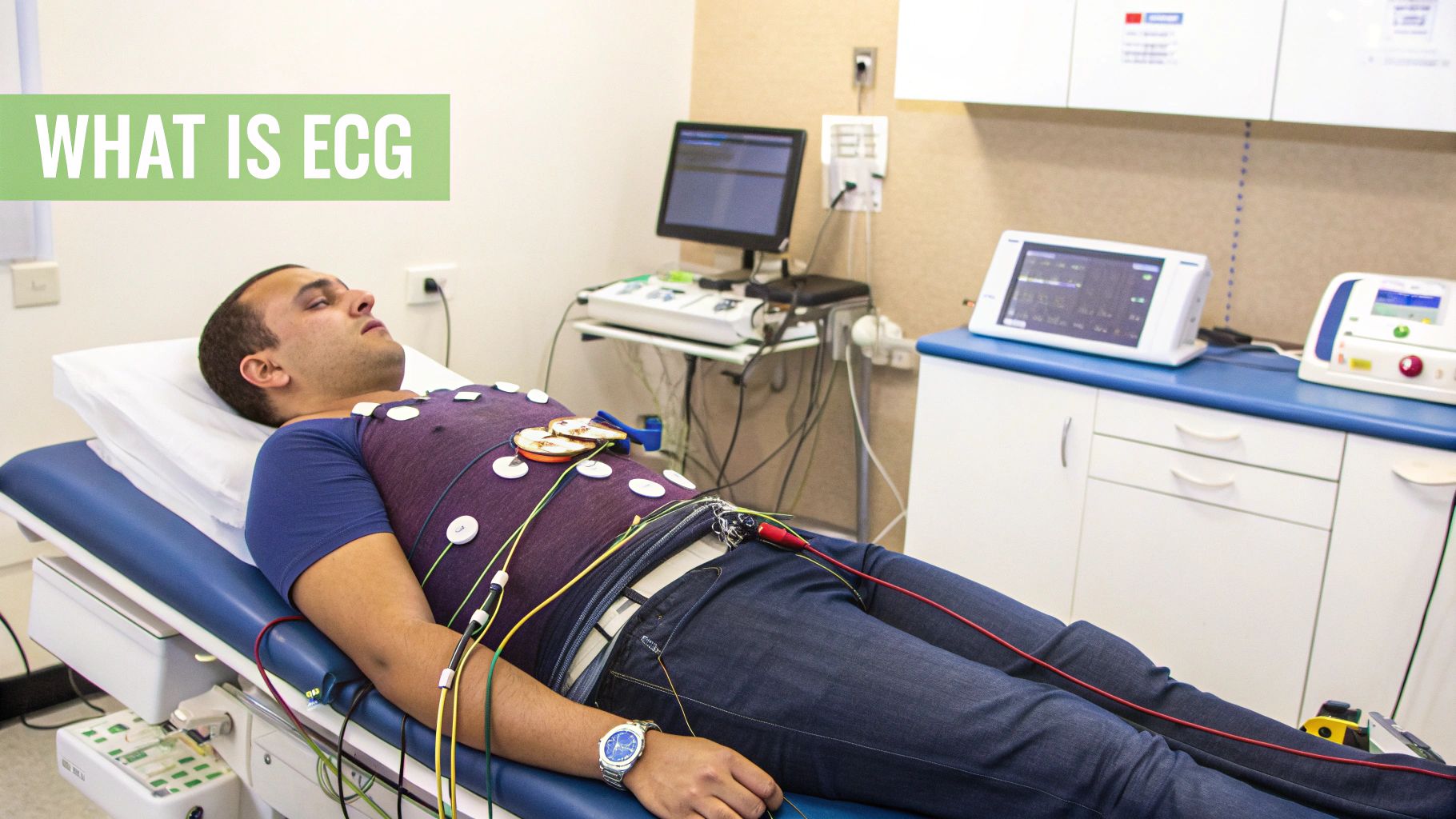
Imagine your heart has its own internal electrical system. Tiny signals are constantly firing, telling the heart muscle when to contract and pump blood around your body. An ECG is a brilliant tool that simply listens in on these signals and records them.
In just a few minutes, it creates a visual tracing of your heart's performance. This test is a cornerstone of modern cardiac care, giving doctors a fast and effective way to assess how well your heart is working. It’s often one of the very first steps they’ll take when looking into any symptoms that might point to a heart problem.
For a quick overview of what an ECG test involves, have a look at the table below.
Key Aspects Of An ECG Test At A Glance
| Aspect | Description |
|---|---|
| Test Name | Electrocardiogram (ECG or EKG) |
| Purpose | To record the heart's electrical activity and rhythm. |
| Procedure | Small, sticky sensors (electrodes) are placed on the chest, arms, and legs. |
| Duration | The test itself usually takes only 5-10 minutes. |
| Sensation | Completely painless and non-invasive. You won't feel a thing. |
| Used For | Diagnosing arrhythmias, heart attacks, and other cardiac conditions. |
This table summarises the essentials, but let's explore exactly why a doctor might recommend one.
Why Is an ECG So Common?
A healthcare professional might suggest an ECG for several reasons. It's an essential diagnostic tool if you're experiencing symptoms that could hint at a heart issue. Knowing why the test is being done can really help demystify the process and ease any nerves you might have.
Common reasons for needing an ECG include investigating:
- Chest pain or discomfort to check for signs of poor blood flow or a heart attack.
- A racing heartbeat (palpitations) or an unusually slow pulse.
- Dizziness, light-headedness, or unexplained fainting spells.
- Shortness of breath or fatigue that could be linked to your heart's function.
Health Tip: If you experience any of these symptoms, especially sudden chest pain, shortness of breath, or pain radiating to your arm or jaw, seek immediate medical attention. Early intervention is critical for heart health. For ongoing well-being, focus on a balanced diet rich in fruits, vegetables, and whole grains, and aim for at least 150 minutes of moderate exercise per week.
The test's prevalence is a testament to its incredible value and safety. It's an extremely common procedure across the UK, used for both initial diagnosis and ongoing monitoring. To give you a sense of scale, data reviewed by the NHS shows that approximately 152 million adult ECG electrodes are purchased annually in the UK, which highlights just how many of these tests are performed. You can learn more about this data from the NHS%20Published%2001.2018.pdf).
Why Your Doctor Might Recommend an ECG
So, why would your doctor suggest an ECG? It’s often one of the first things they’ll do to get a clear picture of your heart's health, especially if you’ve mentioned certain symptoms. Think of it as a quick, painless, and incredibly valuable snapshot of your cardiac activity.
If you've been feeling things like chest pain, a fluttering or racing heart (palpitations), sudden shortness of breath, or dizzy spells, an ECG is the go-to starting point. For instance, when someone presents with what could be major heart attack symptoms, an ECG is one of the most immediate tools a doctor has to see what’s going on. It can show if the heart muscle is starved of blood or if there are signs of damage.
Diagnosing and Monitoring Heart Conditions
Beyond just checking out immediate symptoms, the ECG is a workhorse for both diagnosing and keeping an eye on long-term heart conditions. It helps your doctor track your heart’s electrical patterns over time, building a much more complete health profile.
An ECG is brilliant at spotting a few key issues:
- Arrhythmias: This is just a fancy word for an irregular heartbeat. Your heart might be beating too fast, too slow, or just plain erratically. An ECG makes these rhythm problems obvious.
- Coronary Heart Disease: This happens when the arteries supplying your heart get clogged up with fatty deposits, restricting blood flow. An ECG can pick up on the tell-tale signs of this, known as ischaemia.
- Heart Attacks: The test can reveal evidence of a previous heart attack you might not have even known about, or more critically, give real-time data during a current one.
- Cardiomyopathy: This is a condition where the heart muscle itself is diseased, making it harder to pump blood around the body. An ECG can show changes that suggest the heart’s walls have become thickened or enlarged.
Proactive and Preventative Healthcare
But an ECG isn't just for when you feel unwell. It’s also a fantastic tool for staying ahead of the game. Your doctor might recommend one as part of a routine check-up, especially if you have risk factors like high blood pressure, diabetes, or a family history of heart trouble. It’s all part of a bigger picture; understanding https://thelagom.co.uk/2024/09/28/the-importance-of-health-screenings/ helps you be an active partner in your own health journey.
Lifestyle Tip: To proactively manage your heart health, focus on controlling risk factors. Regularly monitor your blood pressure and cholesterol levels. If you smoke, quitting is the most significant step you can take. Limiting alcohol intake and managing stress through techniques like mindfulness or yoga can also have a profound positive impact. Regular check-ups with your doctor are key to staying ahead of potential issues.
Exploring the Different Types of ECG Tests
When you hear the term ‘ECG’, it might sound like a single, straightforward test. In reality, it covers a few different methods for measuring your heart's electrical activity. The type of ECG your doctor recommends will depend entirely on your symptoms and what they're looking to find.
After all, not all heart problems are present 24/7. Some issues come and go, which is why there are different ways to capture your heart's data – from a quick snapshot in the clinic to a continuous recording over a full day. Let's break them down.
The Standard Resting ECG
The most common type you'll encounter is the resting ECG. Think of it as a still photograph of your heart's electrical function at a single moment in time. You'll be asked to lie down and relax while it's carried out, and the whole thing is usually over in just five to ten minutes.
This test is fantastic for picking up on persistent problems, such as a heart rhythm that's always a bit off or signs of damage from a past heart attack. Because it’s so quick and simple, it’s often the first port of call in any cardiac investigation.
The image below gives a great visual of how any ECG works, from the heart's natural electrical spark to the wavy lines on the final report.
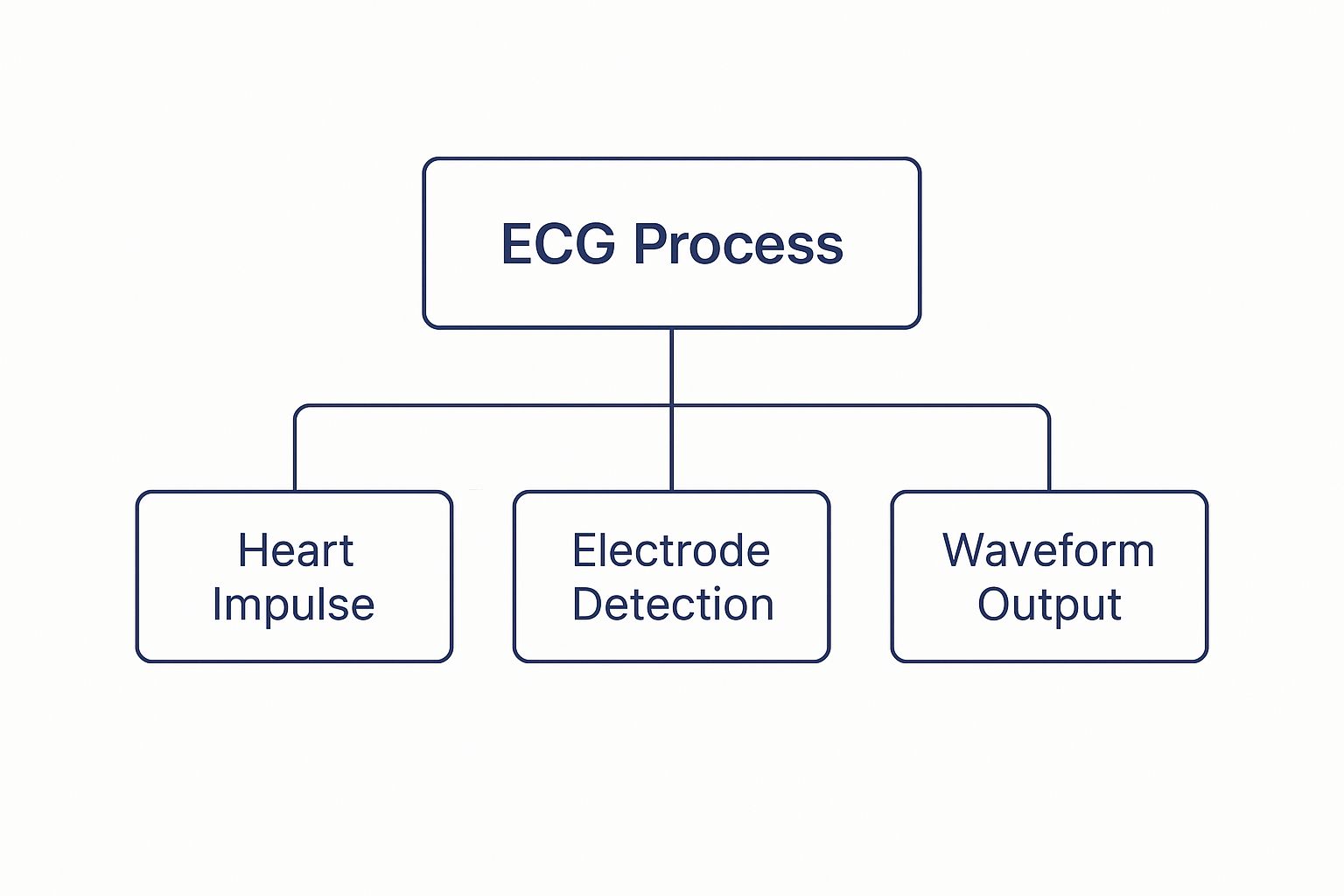
As you can see, the process starts with your heart’s own impulse. Electrodes on your skin pick up this tiny signal, which is then amplified and translated into the familiar waveform we see on an ECG printout.
The Ambulatory ECG (or Holter Monitor)
But what happens if your symptoms, like dizziness or palpitations, are sporadic? A ten-minute resting ECG is likely to miss them completely. This is where an ambulatory ECG, more commonly known as a Holter monitor, becomes invaluable.
Health Tip: If you're scheduled for a Holter monitor, try to maintain your typical daily routine. This provides the most accurate data. Be diligent about logging your activities and any symptoms you feel in the diary provided. Note down the time you exercised, felt stressed, or had a coffee. This context is crucial for your doctor to interpret the ECG findings correctly.
The Exercise ECG (or Stress Test)
Finally, we have the exercise ECG, often just called a stress test. The name says it all: this test is designed to see how your heart performs under physical strain. You'll be connected to an ECG machine while you walk on a treadmill or pedal on a stationary bike.
The intensity of the exercise is increased gradually, allowing your doctor to see how your heart rate, rhythm, and blood supply respond to the extra demand. It’s especially helpful for looking into symptoms like chest pain that only appear when you're active.
While it was once a common screening tool, its use has become more focused. In the UK, the exercise ECG's sensitivity for detecting coronary heart disease is around 45-50%. Because of this, as explained in these UK clinical guidelines, it's now mainly used to assess symptoms in specific situations rather than for general screening in people without any symptoms.
How to Prepare and What Happens During the Test
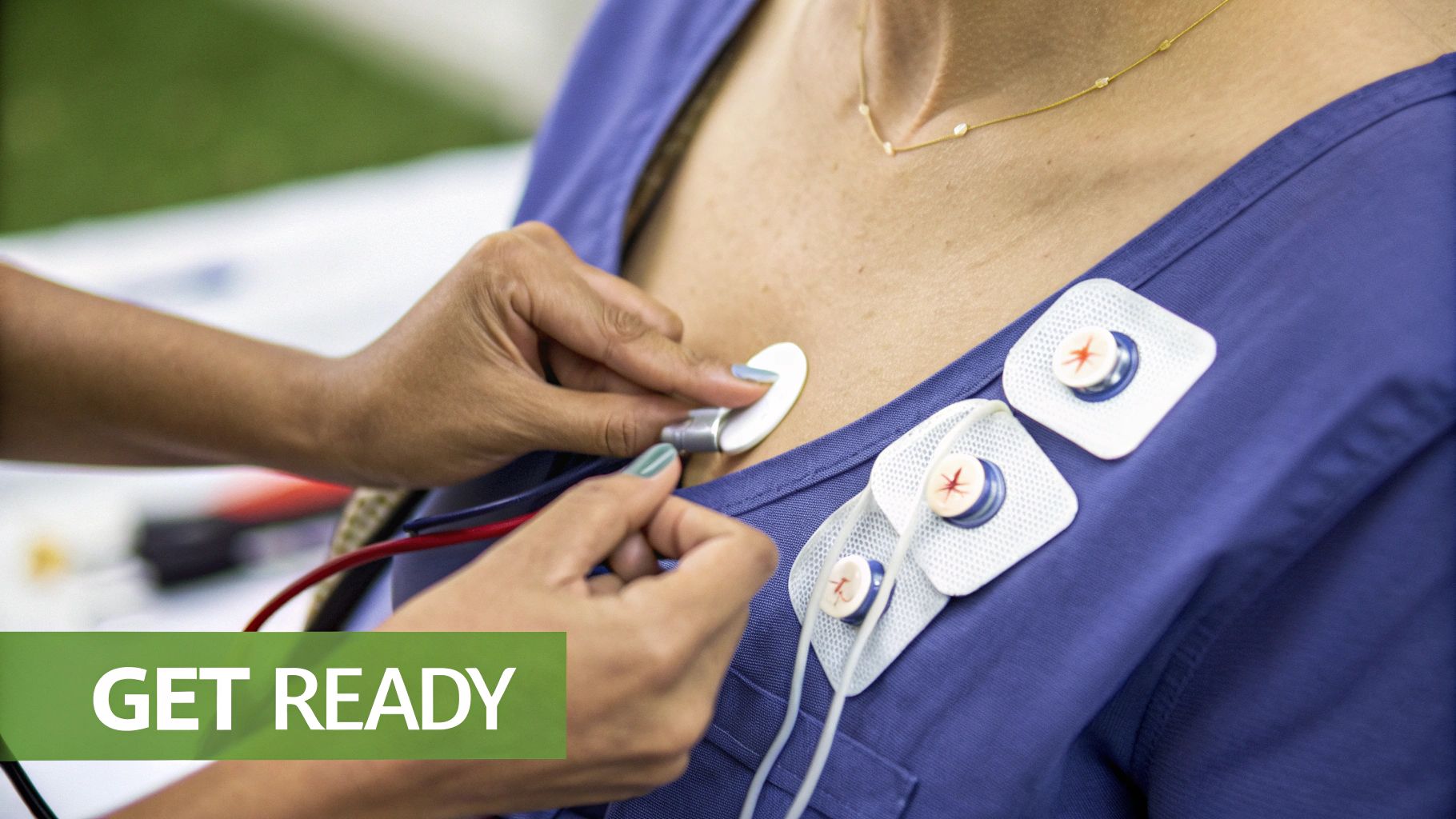
Knowing what’s coming can make any medical procedure feel a lot less daunting. The good news is that preparing for an ECG is incredibly straightforward. There are just a couple of simple things to bear in mind to make sure we get a clear and accurate picture of your heart.
The main thing to remember is to avoid using any skin creams, lotions, or oils on your chest and limbs on the day of the test. These can create a barrier that stops the sticky electrode pads from getting good contact with your skin.
Proper skin contact is crucial for the ECG machine to detect those tiny electrical signals your heart produces. For the same reason, the technician might need to shave small patches of hair where the electrodes will be placed to ensure they stick on properly.
The ECG Procedure Step by Step
The actual ECG test is completely painless and surprisingly quick, often taking just five to ten minutes from the moment you walk in the door. The whole process is designed to be as comfortable as possible, and a nurse or technician will be there to guide you through it.
Here’s a simple breakdown of what will happen:
- Getting Ready: First, you’ll be asked to undress from the waist up. Don’t worry, you’ll be given a gown or a sheet to maintain your privacy. You'll then lie down on an examination table.
- Attaching the Electrodes: Next, the technician will place several small, sticky sensors (electrodes) on specific points on your chest, arms, and legs. These are connected by thin wires to the ECG machine.
- The Recording: Once everything is connected, all you need to do is lie still and breathe normally. It only takes a minute or two for the machine to capture the electrical rhythm of your heart and print out the tracing.
- Finishing Up: After the recording is done, the technician will carefully peel off the electrodes. You can then get dressed, and that’s it—you’re all finished.
The most important thing you can do during the recording is to simply relax and stay as still as you can. Any movement, even shivering, can create interference on the tracing. Just take a few calm breaths and let the machine do its job.
Lifestyle Tips for Accurate Results
While you don't need to make any drastic changes to your routine, a couple of small tweaks can help ensure the ECG reflects your heart’s true resting state.
It's a good idea to avoid any strenuous exercise right before your appointment, as that can temporarily increase your heart rate. Similarly, try not to drink a large glass of very cold water just before the test, as it can occasionally cause minor changes on the ECG. Arrive calm and relaxed; practicing a few deep breathing exercises in the waiting room can help settle your heart rate for a more accurate baseline reading. These are tiny details, but they help us get the most precise reading possible.
Making Sense of Your ECG Results
Getting your hands on a medical report can feel a bit daunting, especially when it’s filled with squiggly lines and technical jargon. So, let’s break down what your ECG results actually mean in plain English.
First things first, an ECG is just one piece of the puzzle. Think of it as a snapshot of your heart's electrical system at a single moment. Your doctor will always look at these findings alongside your symptoms, medical history, and any other tests you’ve had. It provides crucial clues, but it rarely tells the whole story on its own.
What Does a Normal ECG Result Mean?
Seeing the words ‘normal’ or ‘unremarkable’ on your ECG report is great news. It generally means that during the test, your heart was beating at a steady pace and with a consistent rhythm.
In simple terms, a normal result suggests a few key things:
- A healthy heart rate: Your heart is ticking along nicely, usually between 60 and 100 beats per minute at rest.
- A regular rhythm: The beats are evenly spaced, which is a sign of a stable rhythm originating from the heart's natural pacemaker.
- Clear electrical pathways: The signals that make your heart contract are travelling through the muscle without any significant delays or roadblocks.
Interpreting Abnormal ECG Findings
If your ECG shows something outside the normal range, don’t jump to conclusions. Many of these variations are minor and don't signal a serious problem. An ‘abnormal’ finding is simply your doctor's cue to look a little closer and build a more complete picture of what's going on.
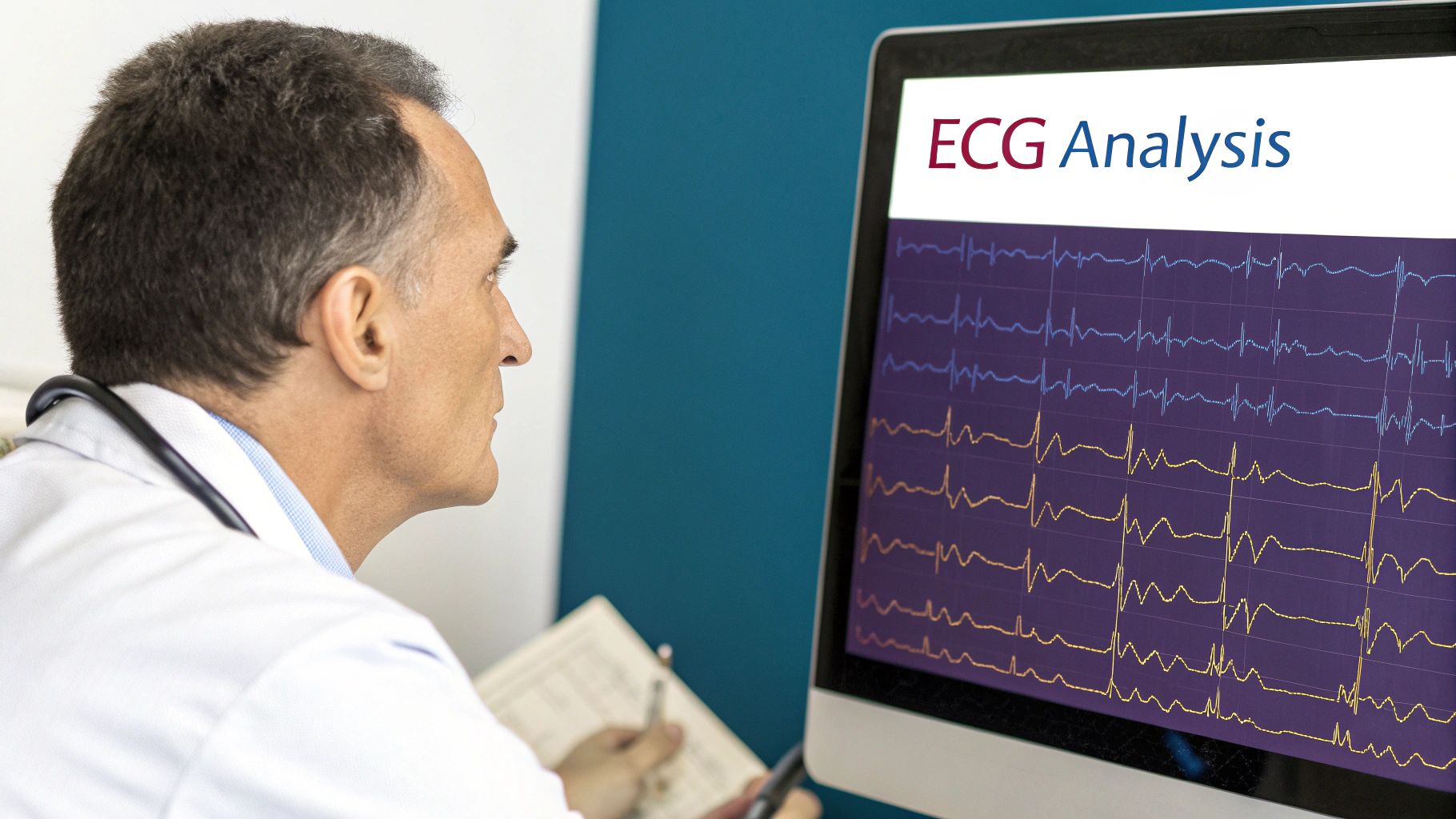
The real power of an ECG is its ability to spot patterns that might point towards certain heart conditions. Your doctor is trained to analyse these complex waveforms for tell-tale signs.
Health Advice: Regardless of your ECG results, maintaining a heart-healthy lifestyle is always beneficial. A 'normal' result is reassuring, but it's not a free pass. Continue to focus on a balanced diet, regular physical activity, and stress management. If your result is abnormal, work closely with your doctor to create a management plan, which will almost certainly include these positive lifestyle adjustments.
Common ECG Findings And What They Might Mean
This table explains some of the more common terms found on an ECG report and what they could potentially signify.
| ECG Finding | Potential Meaning |
|---|---|
| Arrhythmia | This means your heart rhythm is irregular. It might be too fast (tachycardia) or too slow (bradycardia). |
| Heart Block | The electrical signals are being slowed down or even blocked as they move through the heart. |
| Ischaemia | These are signs that the heart muscle isn't getting enough oxygen, which is often due to narrowed arteries. |
| Evidence of a past heart attack | An ECG can sometimes show signs of permanent damage to the heart muscle from a previous event. |
| Ventricular Hypertrophy | This can suggest that the walls of the heart’s main pumping chambers (the ventricles) have become thickened or enlarged. |
Remember, if your report does flag an issue, your doctor will walk you through exactly what it means for you. They might suggest further tests, like an echocardiogram (an ultrasound of the heart) or a wearable ECG monitor for a few days, to get more detailed information. It’s all part of a careful process to make sure you get an accurate diagnosis and the very best care.
Actionable Lifestyle Changes for a Healthy Heart
Whether your ECG results are a clean bill of health or a nudge to make some changes, your daily habits are what truly shape your heart's future. Taking proactive steps is the single best way to look after your cardiovascular system for the long haul.
You don't need a complete life overhaul overnight. It’s the small, steady steps that add up to make a huge difference to your heart. Think of it as building a toolkit for better health, one good habit at a time.
Embrace a Heart-Smart Diet
What you put on your plate has a direct line to your heart health, influencing everything from blood pressure and cholesterol to overall inflammation. Experts often point to a Mediterranean style of eating for its heart-protective benefits, as it’s all about fresh, unprocessed foods.
This way of eating is built around:
- Fruits and Vegetables: Full of antioxidants and essential vitamins.
- Lean Proteins: Think fish, chicken, beans, and lentils.
- Healthy Fats: From sources like olive oil, nuts, and avocados.
- Whole Grains: Such as oats, brown rice, and quinoa.
What you leave out is just as crucial—try to cut back on processed foods, sugary drinks, and too much saturated fat. If you’re just getting started, a straightforward beginner diet and exercise plan can give you a solid foundation to build upon.
The Importance of Regular Movement
Getting your body moving is like sending your heart to the gym; it strengthens the muscle and helps you maintain a healthy weight. The NHS suggests a simple goal: aim for at least 150 minutes of moderate-intensity activity each week.
That doesn’t mean you have to become a marathon runner. Brisk walking, cycling with friends, swimming, or even getting stuck into some gardening all count. The secret is to find an activity you genuinely enjoy, because that’s what makes it stick. Even breaking it up into 10-minute chunks throughout the day is effective.
Manage Stress and Other Key Factors
Constant stress can put a real strain on your heart by raising blood pressure and heart rate. Finding healthy outlets—like mindfulness, a walk in nature, or simple deep-breathing exercises—can work wonders for your cardiovascular system.
On top of that, quitting smoking is probably the single most powerful thing you can do for your heart. Cutting back on alcohol is a close second. Taking control of these areas is just as vital as learning how to manage high blood pressure. Ensure you get 7-9 hours of quality sleep per night, as poor sleep is also linked to an increased risk of heart disease.
Your ECG Questions, Answered
It’s only natural to have questions before any medical procedure. To give you some peace of mind, we’ve put together straightforward answers to the things our patients most often ask about the ECG test.
Is an ECG Painful?
Not at all. An ECG is a completely non-invasive and painless test. You won’t feel any electricity going into your body—the machine only listens in.
The only sensation you might notice is the mild stickiness of the electrode pads when they’re placed on your skin and later removed. Because it simply records your heart's existing electrical signals, it's one of the safest diagnostic tools we have. There are no needles, no radiation, and no risks, making it perfectly safe for everyone, including expectant mothers.
How Long Does it Take to Get the Results?
The ECG machine generates the reading of your heart's rhythm in real-time. A trained professional, like your GP or a heart specialist, then needs to look over the tracing to interpret what it means.
Often, your doctor can review the results and give you a preliminary idea of what they’ve found right there in your appointment. If the tracing needs a closer look from a specialist, you'll usually get the final report back within a couple of days.
Think of an ECG as a snapshot. It shows us your heart’s electrical activity at that exact moment, highlighting current health and potential risks. It’s an incredibly valuable clue, but it isn't a crystal ball that can predict a future heart attack. Consistent healthy lifestyle choices are your best tool for prevention.
What Happens if My ECG is Abnormal?
First, don't panic. An 'abnormal' result isn’t automatically a cause for alarm; it's simply a signal for your doctor to look a bit closer. Many slight variations on an ECG tracing are harmless and don't point to any serious problems.
If your test does flag a potential issue, it becomes the starting point for a conversation with your doctor. They will explain what the results mean in the context of your symptoms and overall health. From there, you’ll work together on a clear plan, which could involve anything from lifestyle changes and medication to further tests that help build a complete picture of your heart's health. Your ECG is a guide for your care, not a final verdict.
At The Lagom Clinic, we believe in proactive care and clear communication. If you have any concerns about your heart health or simply want to understand your personal risk factors, our team is here to help with on-site ECGs and expert consultations. You can book an appointment today to get the answers you need.
Book an ECG at The Lagom Clinic
ECG testing is included in our Premium and Ultra health screening packages, or available during a private GP consultation.


 Members Consultation